

On a mild Atlanta morning, you can watch the city reveal itself on the BeltLine. A couple of blocks later, an old rail corridor turns into a trail, a park, a mural wall, and a lesson in how cities reinvent themselves.
If you’ve heard people talk about beltline atlanta like it’s a park, a transportation project, and a cultural movement all at once, they’re not exaggerating. It’s all three.
From Thesis to Transformation The Beltline's Origin
The BeltLine began with a simple city-planning question. What if Atlanta used the rail corridors it already had to connect neighborhoods that had grown apart?
In 1999, Georgia Tech graduate student Ryan Gravel built his thesis around that idea. He proposed reusing a ring of old rail lines around the city and turning that inherited infrastructure into a connected system of trails, parks, and future transit. As summarized in the Atlanta BeltLine overview, the plan grew into a 22-mile loop intended to connect 45 neighborhoods.
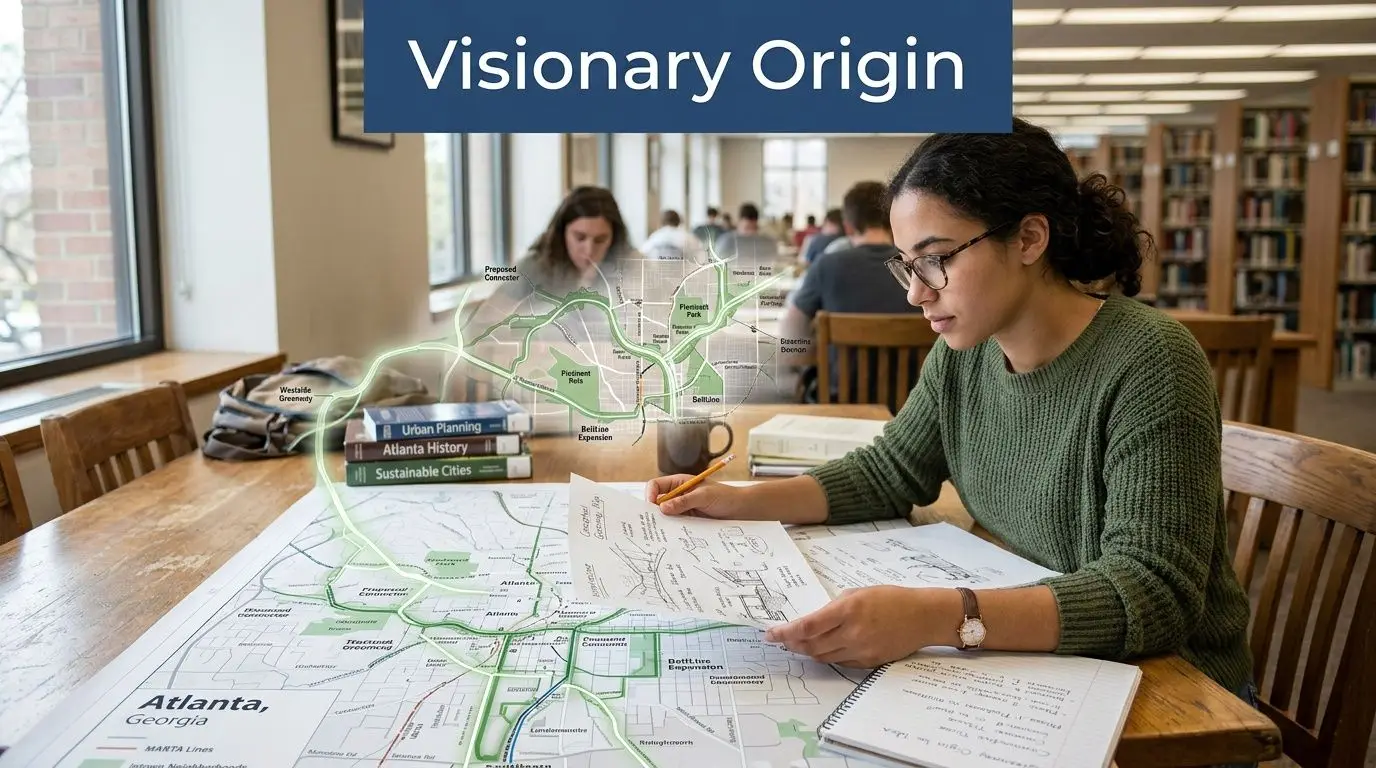
How an idea became a city project
A thesis can suggest a better city. Turning that idea into pavement, parks, and public investment is a different job.
The BeltLine moved from proposal to formal public project in 2005, when local agencies approved the redevelopment plan and set up the BeltLine Tax Allocation District, or TAD. In plain English, that funding approach uses future growth in property tax revenue along the corridor to help pay for work in the corridor itself. City planners often use tools like this when a project is too large to fund all at once and is expected to raise nearby land values over time.
That structure also helps explain why the BeltLine shows up in so many local conversations. It is a transportation project, a parks project, and a redevelopment strategy at the same time.
Why the rail corridor mattered
The route itself shaped the entire project. Atlanta did not clear a brand-new loop through the city. It reused a patchwork of existing railroad segments that had been assembled over many decades.
That reuse explains both the opportunity and the difficulty. Existing right-of-way gives planners a head start, much like renovating an old house with strong bones. But old rail land can bring irregular curves, industrial remnants, property line complications, and street crossings that need careful redesign for people on foot and on bikes.
For residents, that history explains why one section can feel polished while another still feels like a work in progress. For local businesses, it explains the operational side too. Buildings near the corridor often gain visibility and foot traffic, but delivery access, parking patterns, service routes, and even Wi-Fi or device deployment for outdoor-facing operations may need adjustment as the area gets busier. Companies opening or expanding near the corridor often benefit from planning their tech and pickup logistics early, especially in high-traffic areas discussed in this practical guide to Atlanta BeltLine business and equipment considerations.
Local planning insight: The BeltLine makes the most sense as a city-scale framework that supports movement, public space, and neighborhood change all at once.
That broader framework helps explain the project’s influence on housing, business growth, and daily life in Atlanta.
A Segment-by-Segment Tour of the Beltline
A first visit to BeltLine Atlanta can be disorienting in a very normal way. You hear people say “the BeltLine” as if it is one single path with one single feel. On the ground, it works more like a string of distinct rooms in the same house. The flooring changes, the noise changes, and the purpose changes from one room to the next.
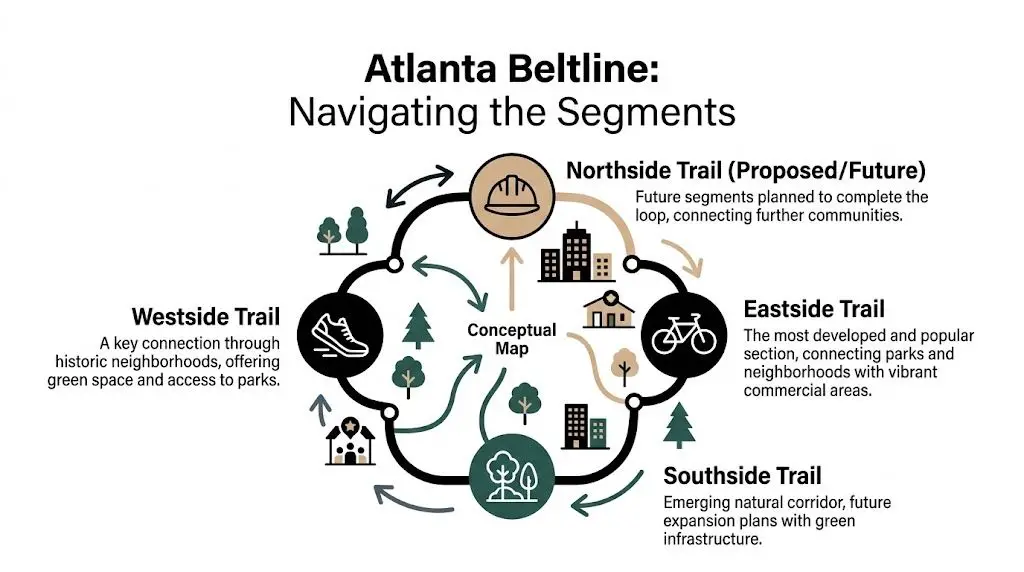
The easiest way to choose a segment is to start with your goal. A coffee walk, a long run, a family outing, a restaurant stop, and a service call for a nearby business all point to different entry spots. That simple shift clears up a lot of confusion.
Eastside Trail
The Eastside Trail is the section many visitors meet first, and it often shapes their entire impression of the project. It feels dense, social, and closely tied to nearby shops, patios, apartments, and side streets. If you want the version of the BeltLine that feels most plugged into everyday intown Atlanta life, this is usually it.
You will notice three patterns quickly:
- Heavy foot and bike traffic for much of the day
- Frequent access points into surrounding neighborhoods
- Businesses that treat the trail as part of their front door, not just something nearby
That last point matters for residents and for companies. A storefront on the Eastside can benefit from visibility and steady pedestrian flow, but the operating reality is tighter. Deliveries often need sharper timing. Pickup zones can fill fast. Outdoor point-of-sale setups, guest Wi-Fi, and mobile devices used by staff need reliable planning because a busy corridor puts pressure on both physical and digital operations.
Westside Trail
The Westside has a different tempo. The corridor often feels more open, with longer sightlines and a stronger relationship to parks and historic neighborhoods. For many Atlantans, the BeltLine’s public space mission becomes clearer in this section because the route can feel less crowded and more reflective.
This segment works well for people who want:
- More breathing room than the busiest intown stretches
- Direct access to parks and community spaces
- A clearer visual sense of the old rail corridor beneath the newer trail design
For business owners, the Westside can require a different playbook than the Eastside. Customer arrivals may be less constant and more destination-based, which changes staffing, signage, and delivery assumptions. If your office or facility sits near the corridor, it also helps to plan ahead for IT moves, device pickups, and equipment retirement around access windows and event traffic. This local guide to Atlanta BeltLine business logistics and equipment planning is useful for that kind of operational prep.
Northside connections
The Northside sections matter because they show how the BeltLine grows in practice. Big city projects rarely appear all at once. They take shape through links, spurs, and shorter pieces that gradually change how people move between neighborhoods, offices, and transit.
That is why a BeltLine map is easier to read when you ask practical questions. Where can I enter? Where do I exit? What connects today, and what still requires a street-level detour?
A short connection can still change daily routines. It can turn a car trip into a walk to lunch, give an apartment building better access to nearby retail, or make an office more attractive to employees who value trail access.
Southside and the sections still taking shape
The Southside gives you a clearer view of the project as an ongoing build rather than a finished product. Some stretches feel more transitional, and that is part of the reality of a long corridor built across very different parts of the city. Visitors sometimes read that unevenness as a flaw. A planner would read it as a sign that construction, land use change, and public investment are still catching up to the vision.
For a first visit, a simple approach works best:
- Pick a purpose before you pick a trailhead.
- Choose a specific segment rather than “the BeltLine” in general.
- Expect the built environment to vary from polished and busy to quieter and still evolving.
That same rule applies to operations. A business near a mature access point will handle parking, loading, customer arrivals, and field service very differently from a business near an area with active construction or limited connections.
Northeast Trail and active construction
The Northeast Trail helps explain why full buildout takes time. According to a June 2024 Atlanta BeltLine construction update, Segment 3 includes utility relocation work and modular bridge construction over I-85/75 to connect the Armour-Ottley area and MARTA’s Lindbergh Center.
That is not simple trail paving. It is city-scale engineering in an already built environment.
For visitors, the practical lesson is straightforward. Check current segment conditions before you go, and do not assume every map view reflects the same on-the-ground experience. For residents and nearby businesses, the lesson is even more concrete. Access patterns can shift while work is underway, so route planning, vendor scheduling, client visits, and on-site technology support all benefit from a little extra lead time.
More Than a Trail Culture Art and Events
On a good BeltLine evening, you can hear the project before you explain it. A cyclist rolls past. Kids point at a mural. A food stop has a line. Then a crowd gathers for something temporary, a performance, a parade, a public art piece, and the corridor starts to feel less like a path and more like Atlanta’s front porch.
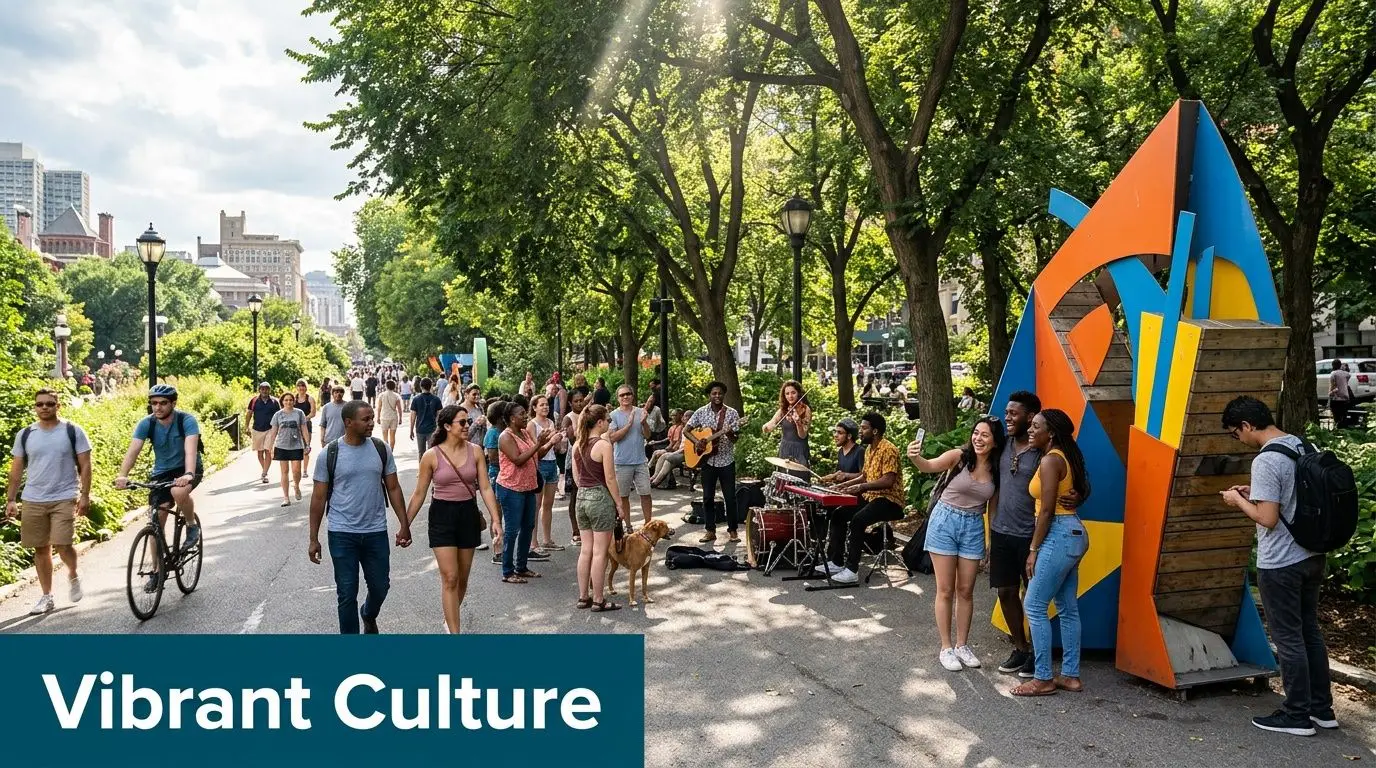
The parade that showed the city had embraced it
The BeltLine Lantern Parade became one of the clearest signs that Atlantans had made the corridor their own. What began as a smaller community gathering grew into a major annual tradition over the years, with handmade lanterns, neighborhood groups, and spectators turning a simple walk into a shared civic ritual.
That matters in city planning terms. Public infrastructure succeeds differently when people choose to return for celebration, not only for transportation or exercise. A road can carry traffic. A beloved public place carries memory.
Art built into the experience
Art on the Atlanta BeltLine gives the corridor much of its personality. Instead of treating art like decoration added at the end, the BeltLine places murals, installations, and performances directly in the route people already use. The result feels more like walking through a changing outdoor gallery than moving along a standard urban trail.
For visitors, that means no two trips feel exactly alike. For residents, it means a familiar segment can still surprise you.
You might head out for a short walk and run into:
- Murals and installations that change the mood of a block
- Performances and pop-up programming that turn the trail into a social space
- Neighborhood-specific character that makes one section feel distinct from the next
That cultural energy also affects day-to-day operations for nearby businesses. A restaurant, clinic, studio, or office near a busy event zone has to plan for heavier foot traffic, tighter curb access, and occasional delivery delays. Even routine work, such as equipment swaps, Wi-Fi troubleshooting, or device pickups, can take longer on festival nights or parade weekends. Companies with staff or inventory near high-activity areas often benefit from planning service windows around major events, much like businesses near the Atlanta Braves area business corridor adjust for game-day activity.
The practical takeaway is simple. The BeltLine creates value through culture as much as connectivity, and anyone living, visiting, or operating a business near it should plan for both.
The Beltline Effect Neighborhoods Businesses and Growth
The BeltLine has changed Atlanta’s development map. Some of that change is easy to celebrate. Some of it is harder to ignore.
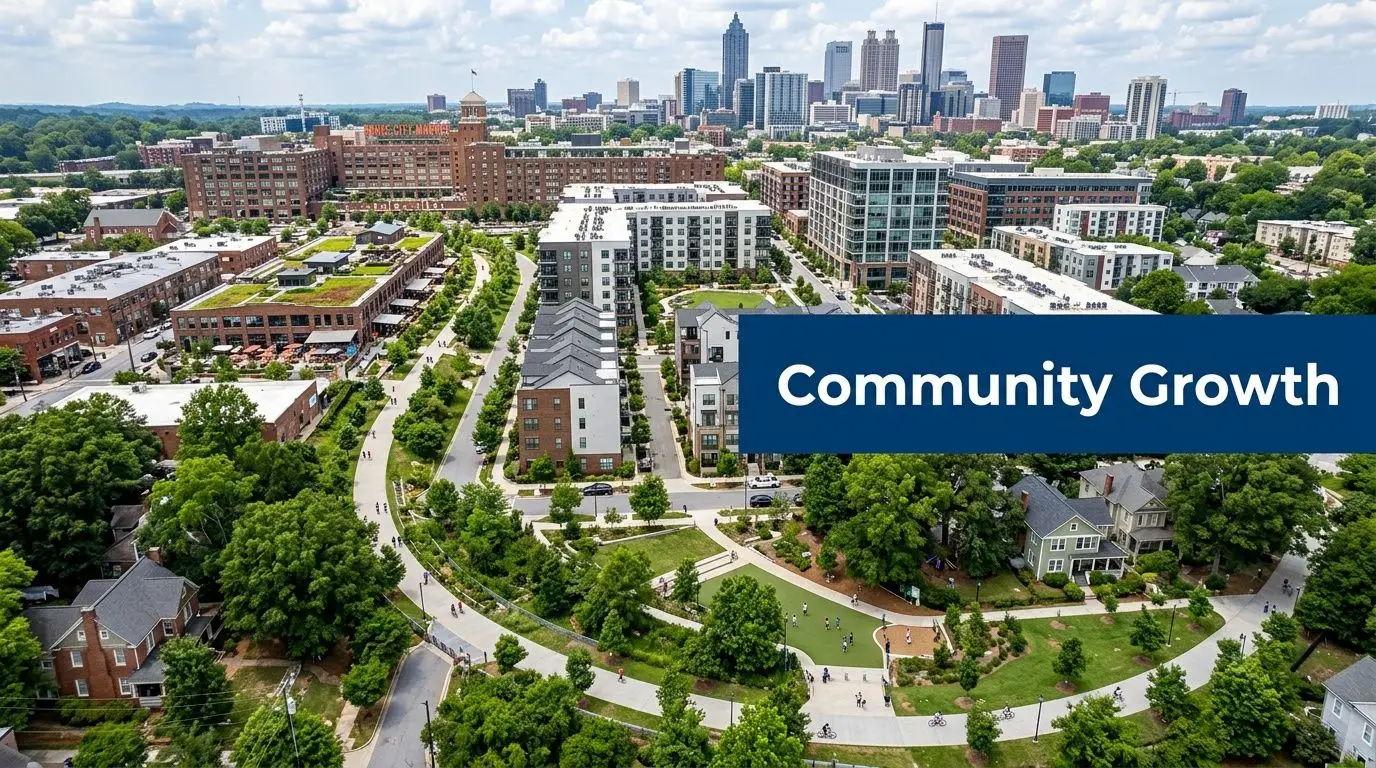
What growth looks like on the ground
Near many BeltLine segments, you can see the pattern clearly. New apartments rise next to old industrial parcels. Coffee shops and offices move into renovated buildings. Public space improves, and private investment follows.
That growth has helped make the corridor one of Atlanta’s most visible redevelopment zones. It has also changed who can afford to live nearby.
The equity challenge
While the BeltLine connects 45 neighborhoods, its success has also contributed to green gentrification. A 2011-2015 study found that home prices near the trail rose significantly faster than in other parts of the city, contributing to the loss of affordable housing and raising equity concerns, according to the Urban Institute at Georgia State analysis.
That doesn’t mean the BeltLine was a bad idea. It means urban improvements don’t spread benefits evenly unless cities pair them with housing strategy, transit access, and protections for longtime residents.
Grounded takeaway: Better public space can raise quality of life and real estate pressure at the same time.
Why businesses should pay attention
For employers and property operators, this isn’t just a policy debate. It affects hiring, commuting, tenant stability, and neighborhood relationships. A corridor that attracts investment also needs practical systems that help existing institutions stay functional.
That includes schools, clinics, offices, and startups near innovation clusters such as Atlanta Tech Village and nearby business networks. When real estate changes quickly, the operating environment changes with it.
Practical Logistics For Businesses and Residents
A Saturday walk on the BeltLine can make the corridor feel effortless. Then Monday arrives, and the same place becomes a puzzle of loading zones, event crowds, service elevators, pickup windows, and building rules.
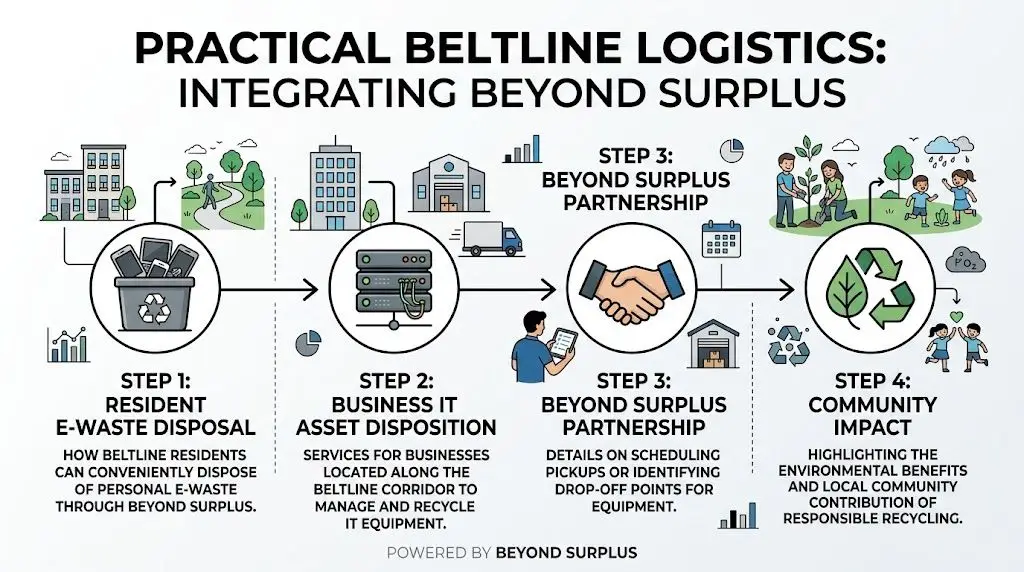
That difference matters for both residents and businesses. The BeltLine works a bit like a string of very different front doors. The trail may feel continuous, but access, parking, curb space, and building operations change from one segment to the next.
Getting around without frustration
Start with the specific stop, not the general idea of "going to the BeltLine." A coffee run near Ponce City Market, a maintenance visit to a mixed-use building, and a move-out from an apartment by the Eastside Trail all require different planning.
A practical checklist helps:
- Pick the access point first. Some destinations are easiest by MARTA, rideshare, bike, or walking. Others still depend on nearby parking decks or side-street parking.
- Match your plan to the task. Social visits are flexible. Deliveries, contractor calls, and property appointments usually are not.
- Check the calendar. Festivals, markets, race days, and major weekend crowds can change travel time and curb access fast.
- Confirm building rules early. Many properties near busy BeltLine segments limit freight elevator use, loading times, or after-hours entry.
For residents, this usually means less stress if you combine errands and avoid peak recreation hours. For businesses, it means treating access as part of operations, not a last-minute detail.
Why turnover creates a hidden waste stream
Fast-changing districts produce a lot of physical turnover. New tenants move in. Offices reconfigure. Storefronts refresh displays and point-of-sale systems. Apartment residents replace routers, TVs, and old laptops during moves.
That constant churn creates an overlooked logistics problem: electronic waste and retired IT assets.
Unlike cardboard or scrap wood, old electronics often carry data, batteries, and components that need special handling. The challenge grows near the BeltLine because so many properties operate in tight footprints with shared docks, limited storage rooms, and frequent vendor traffic. In other words, the same density that makes the corridor lively also makes back-of-house logistics more complicated.
Operational tips for corridor businesses
Companies near beltline atlanta should treat technology disposal as a facilities project with compliance risk, scheduling constraints, and chain-of-custody requirements.
A good internal process usually includes:
- Sort equipment by sensitivity. Servers, laptops, phones, and storage devices need stronger controls than cables, keyboards, or basic peripherals.
- Tie pickups to building operations. Ask about dock reservations, elevator access, insurance requirements, and approved service hours before scheduling removal.
- Request documentation. Certificates for recycling and data destruction help property managers, regulated industries, and multi-site firms document what left the premises and how it was handled.
- Plan for regional routing. Companies that support field teams, traveling staff, or airport-linked operations may need broader pickup coordination, especially near Hartsfield-Jackson business service areas.
This is especially useful for clinics, schools, coworking spaces, and growing small businesses along the corridor. They often replace devices in batches, but store retired equipment in closets or back rooms until the pile becomes a security and space problem.
The hard part usually is not buying new technology. The hard part is removing old technology safely, on schedule, and without disrupting the building.
The Future of the Beltline Transit and Full Loop Completion
The long-term vision isn’t just a better trail system. It’s a fully connected urban loop with transit as a core piece of the experience.
Project plans call for completion of the 22-mile loop by 2030, as a projection noted in earlier BeltLine background reporting. The major transportation question is what kind of rail fits the corridor best.
Planners selected streetcar technology over light rail because the BeltLine has tight geometry in many sections, and streetcars can adapt more easily while supporting frequent service. The same planning review notes estimated capital costs of about $50-70 million per mile for streetcar compared with $100 million or more per mile for light rail, according to the Perkins&Will BeltLine corridor planning summary.
That choice helps explain why transit on the BeltLine has taken so much debate. People often imagine one ideal rail solution. In practice, planners have to match the mode to the corridor they have, not the one they wish they had.
If the full vision comes together, beltline atlanta will function less like a collection of popular trail segments and more like a true city connector.
Frequently Asked Questions About the Beltline
A lot of first-time visitors ask the wrong questions. They ask where the loop starts, whether every segment feels the same, or if it is mainly for exercise. Those are fair questions, but they miss how the BeltLine works in daily life. The more useful questions are about rules, housing, funding, and how businesses operate next to one of Atlanta’s busiest public corridors.
How is the BeltLine funded
The BeltLine is funded through a mix of public and private sources rather than one single pot of money. City funding tools, grants, philanthropic support, and private development all play a role. For regular users, the practical takeaway is simple. New trail sections, parks, transit planning, and redevelopment do not all move on the same timeline because they are not paid for in the same way.
Are there rules or etiquette for using the trails
Yes, and knowing them makes the experience better for everyone. Stay aware of your speed, keep to the right, pass carefully, and expect a mix of walkers, runners, cyclists, strollers, and mobility devices. The BeltLine works a lot like a busy neighborhood main street without cars. People move at different speeds, so courtesy matters as much as pavement width.
Can I bring my dog on the BeltLine
Usually, yes. Dogs are common on the trail, especially near parks and patios, but they should be leashed and under control. Bring water, pay attention to hot pavement in warmer months, and remember that crowded event days can be stressful for some pets.
What is the plan for affordable housing along the BeltLine
Affordable housing is one of the biggest public debates around the project. Better trails, parks, and business activity can make nearby areas more desirable, which often raises rents and property values. City planners and housing advocates have pushed for income-restricted housing and anti-displacement strategies so long-time residents are not priced out of the communities that helped shape these neighborhoods in the first place.
What should businesses near the BeltLine plan for operationally
Access planning matters more than many owners expect. A restaurant, office, clinic, or retail shop near the corridor may have strong foot traffic but still need a clear plan for deliveries, vendor parking, event-day congestion, and after-hours service calls.
That also applies to back-office operations. Companies replacing laptops, POS systems, networking gear, or office electronics should schedule pickups around corridor traffic patterns and property access rules. Teams that need guidance on secure pickup coordination, data destruction, and recycling records can review the IT asset disposal and electronics recycling FAQ.


