
You step onto the trail near Ponce, hear bike bells behind you, smell coffee and barbecue ahead, and realize this isn’t just a path. In Atlanta, the BeltLine feels like a moving front porch where parks, neighborhoods, public art, and city politics all meet.
If you’re new to beltline atlanta ga, the easiest mistake is thinking it’s one single experience. It isn’t. Different sections feel like different Atlantas, and that’s exactly why locals keep coming back.
The Vision That Transformed a Railway into a Revolution
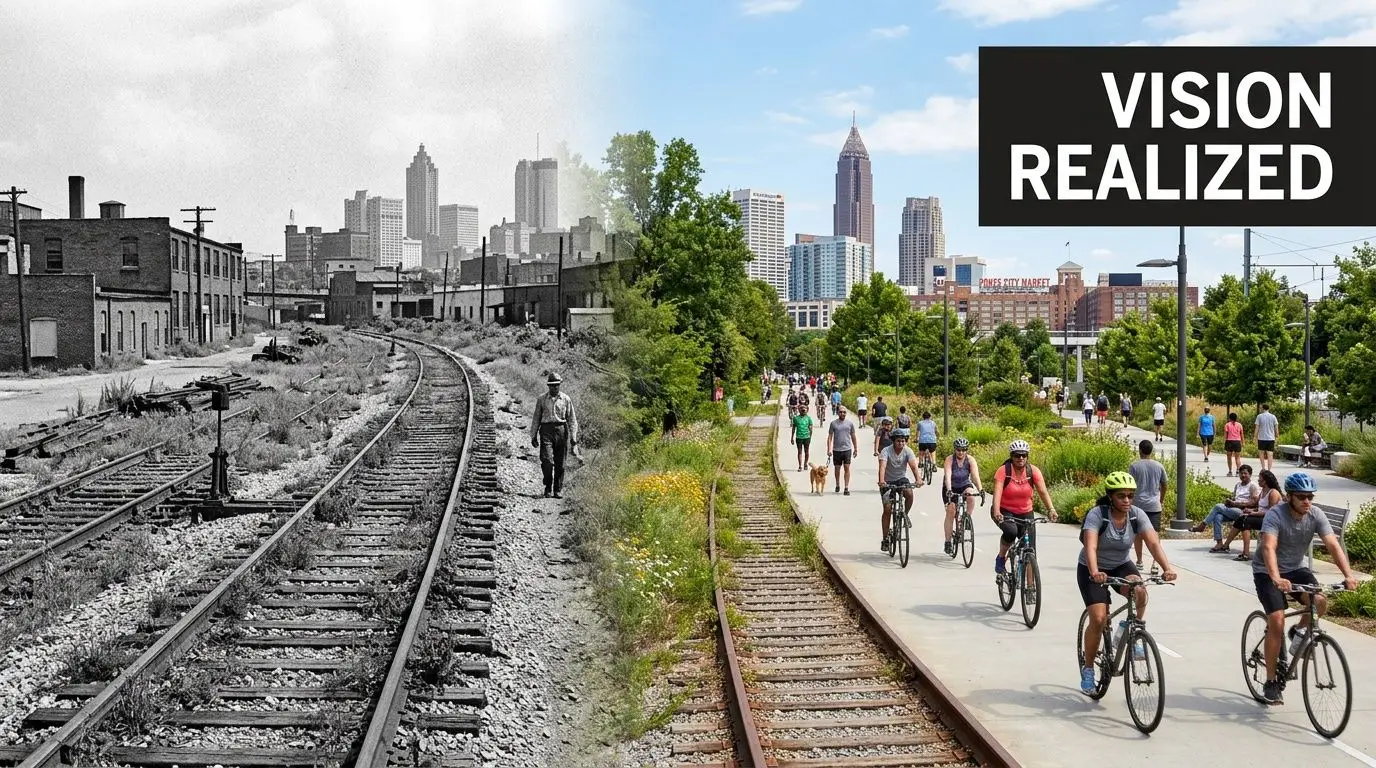
The Atlanta BeltLine started as an idea that sounded almost too ambitious to work. In 1999, Georgia Tech student Ryan Gravel proposed turning old rail corridors into a connected loop for the city, and that student thesis became the seed of what people now know as the BeltLine. The project later launched officially in 2005 with the creation of the BeltLine Tax Allocation District, or TAD, which was designed to help fund construction through future property tax growth, as outlined in the Atlanta BeltLine overview.
How the idea made sense in Atlanta
Atlanta grew around highways, long commutes, and neighborhoods that often felt cut off from each other. The BeltLine offered a different model. It aimed to reuse a former railway corridor to connect places people already lived, worked, and visited.
That’s why locals talk about it as more than a trail. It’s a 22-mile multi-use corridor connecting 45 neighborhoods, and that scale changes how you understand the city. Instead of driving from one pocket to another, you start to see how West End relates to Reynoldstown, or how Old Fourth Ward links up with parks, markets, and civic spaces.
Local perspective: The BeltLine makes Atlanta feel smaller in the best way. Neighborhoods that once seemed separate start to feel connected by habit, not just by map.
Why the funding model mattered
The TAD can sound technical, but the basic idea is simple. The city created a funding structure that could use rising property tax value along the corridor to support the work itself. That helped turn a bold concept into something buildable.
The result is a project that changed how Atlanta talks about redevelopment, public space, and sustainability. It also changed how businesses think about location, foot traffic, logistics, and long-term infrastructure planning. For a broader look at the city’s environmental direction, see how Atlanta is leading the way in recycling innovations.
A newcomer often asks, “So is the BeltLine finished?” Not yet. But the vision has been strong enough that people already use it as if it were part of everyday Atlanta life.
Your Guide to the Main Trail Segments
If you want to enjoy beltline atlanta ga like a local, pick your segment first. Don’t just type “Atlanta BeltLine” into your phone and hope for the best. The experience changes a lot depending on where you start.

Eastside Trail
This is the section most visitors picture first. It’s lively, dense, and packed with movement. You’ll pass murals, patios, runners, strollers, and quick turnoffs to places like Ponce City Market, Krog Street Market, and Piedmont Park.
Come here if you want energy. It’s the easiest part of the BeltLine for a first visit because you can walk a short stretch and still get a full Atlanta snapshot.
Westside Trail
The Westside feels different. It’s calmer, more spacious, and more neighborhood-driven. The atmosphere leans less polished and more grounded, with a stronger sense of historic residential Atlanta.
This area appeals to people who want room to bike, think, or notice details. You still get culture and food nearby, but the pace is easier.
A good rule is simple. If you want bustle, start east. If you want breathing room, start west.
Southside Trail
The Southside gives you a feel for where the BeltLine is still becoming itself. Some stretches already offer that connected-trail rhythm, while other parts feel like a preview of what’s coming.
For newcomers, this can be confusing. Think of it as a place to explore if you’re curious about Atlanta beyond its most photographed corners. You’ll notice more transition, more local context, and more of the city’s ongoing redevelopment story.
Northside Trail
The Northside has a more residential tone. It tends to feel practical and less performative, which many locals appreciate. It’s useful if you want green space, neighborhood access, and a look at how the BeltLine fits into everyday urban life rather than destination traffic.
Here’s a simple way to choose:
- For first-timers: Start on the Eastside Trail for the most recognizable landmarks.
- For cyclists or quieter walkers: Try the Westside Trail.
- For repeat visitors: Explore Southside sections to understand the city’s next phase.
- For a neighborhood feel: Pick the Northside Trail and move at a slower pace.
Getting There and Getting Around
A lot of frustration on the BeltLine comes from bad planning before you arrive. Atlanta locals know this. The trail itself can feel easy, but parking, entry points, and transit choices shape the day.
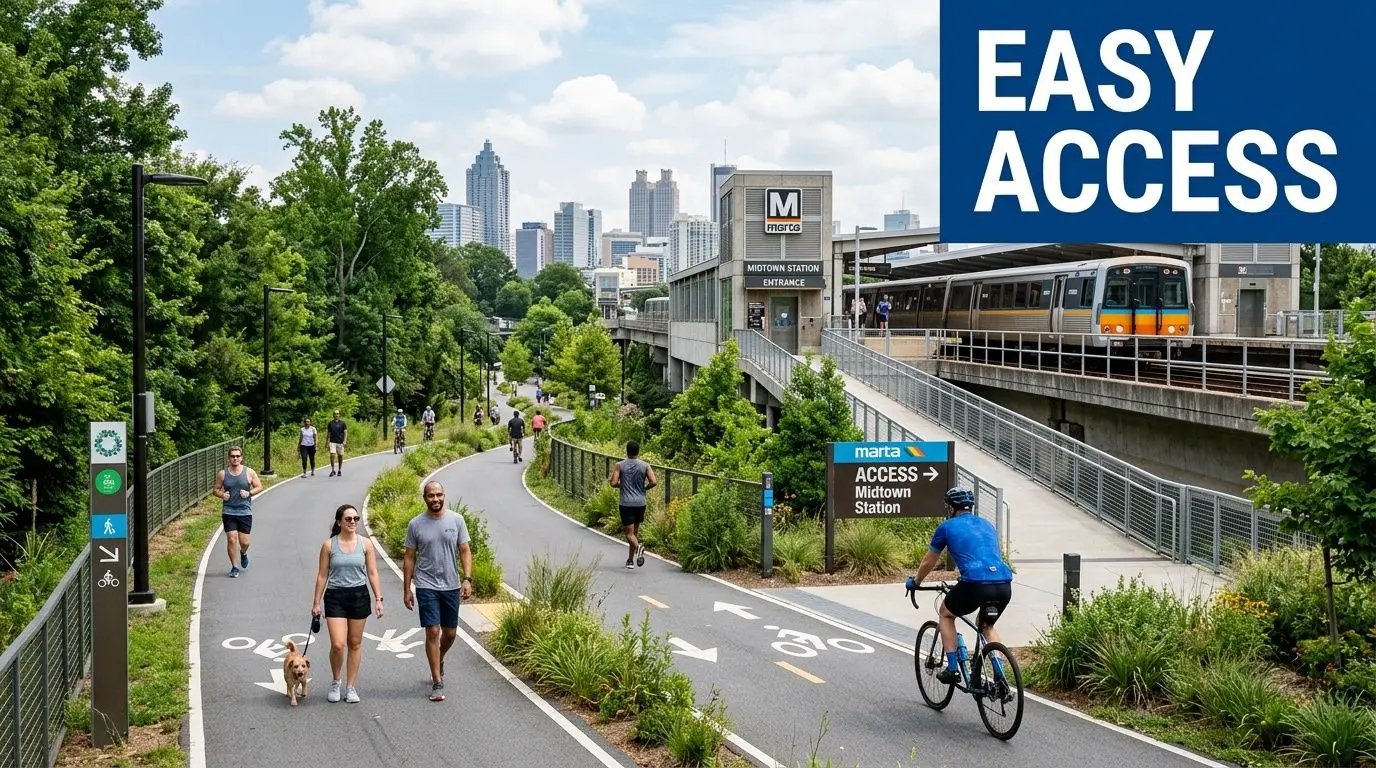
The easiest way to approach your visit
If you’re driving, choose a destination near where you want to spend time. Don’t park far away just because a map suggests a generic access point. On busy days, that usually creates more hassle than it saves.
If you’re taking MARTA, pair your rail stop with a manageable walk, rideshare, or bike connection. That’s often the smoothest option if you want to avoid circling for parking. If you’re interested in Atlanta’s broader transportation ecosystem, the city’s connectivity story also shows up around Hartsfield-Jackson Atlanta International Airport.
Why future transit matters here
The longer-term transit plan is one reason the BeltLine matters so much beyond recreation. According to the MARTA environmental review, the planned streetcar transit is designed for tight turning radii of 50 to 75 feet, 5 to 10 minute headways, and support for 2,000 to 4,000 passengers per hour along the corridor, as described in the Atlanta BeltLine Tier I FEIS.
That might sound like planner language, but it matters in practical ways. Better transit doesn’t just move people to dinner or parks. It can also improve access for workers, vendors, service fleets, and commercial pickups tied to nearby businesses.
What locals usually do
Most regular users keep it simple:
- For a short visit: Walk one segment instead of trying to cover too much.
- For biking: Choose a less crowded stretch if you want steady movement.
- For meetings or errands nearby: Use the BeltLine as part of a larger route, not the whole outing.
- For business logistics: Pay attention to access points and transit connectors, especially near dense commercial zones.
The BeltLine works best when you treat it like a corridor, not an attraction with one front door.
Discovering Neighborhoods and Attractions
The best part of beltline atlanta ga is that it lets you read neighborhoods while you’re moving through them. You don’t just arrive somewhere. You notice the shift in architecture, the public art, the storefronts, the parks, and the people using them.
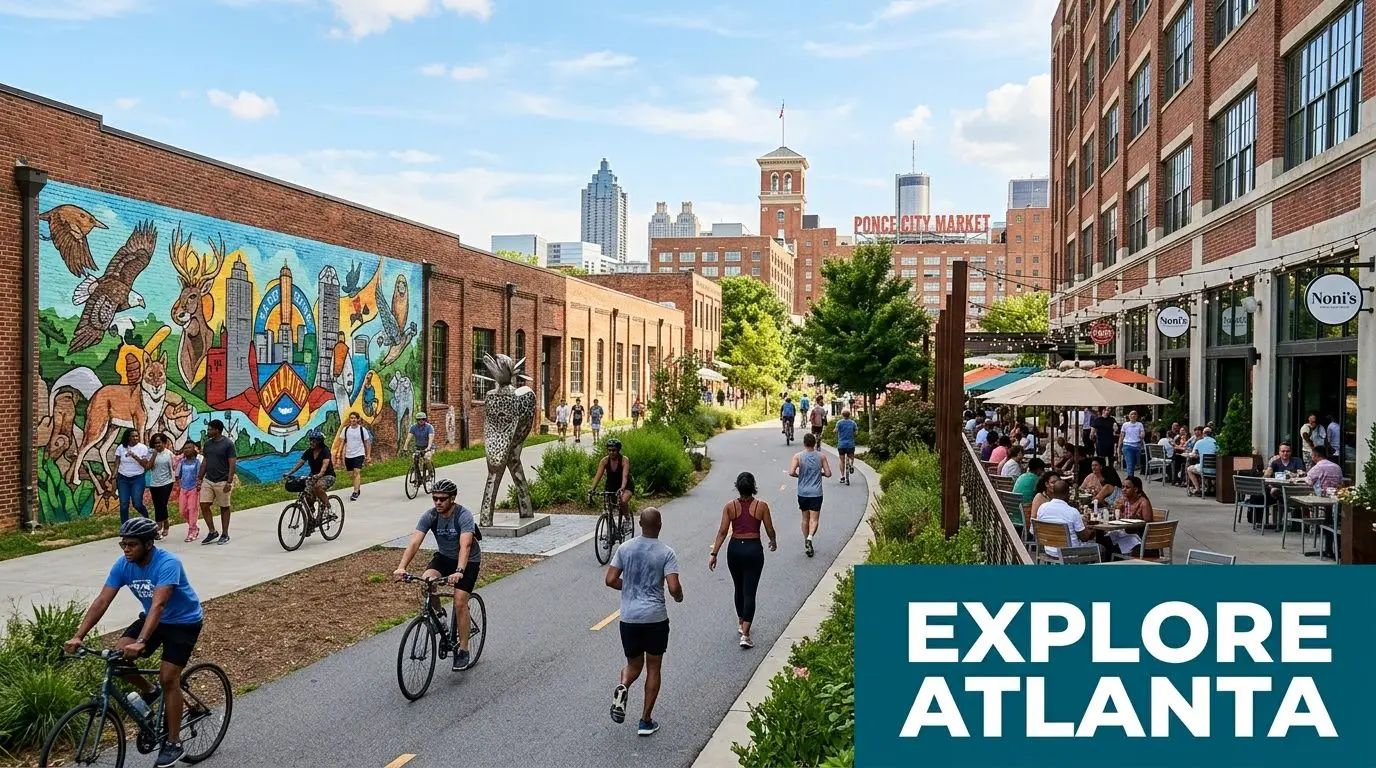
Eastside landmarks and everyday Atlanta
On the Eastside, a lot of first-time visitors gravitate to the obvious anchors. Ponce City Market pulls people in with food, retail, and rooftop views. Krog Street Market gives you another strong stop if you want to build a walking route around eating and browsing.
The public art matters too. The BeltLine’s art program is widely recognized in Atlanta, and the murals help turn a walk into something more memorable than simple exercise. Even if you don’t know the names of neighborhoods yet, the visuals help you feel where you are.
West End and the city behind the postcards
The West End side tells a fuller story about Atlanta. You’ll notice historic homes, churches, older commercial corridors, and a more local rhythm. It’s a useful counterweight to the polished image many newcomers get from social media.
That’s also where the BeltLine’s complexity becomes harder to ignore. Development has brought investment and visibility, but not everyone has benefited in the same way.
According to the BeltLine’s own people-centered project discussion, the BeltLine has also been identified as a key driver of gentrification, and Atlanta lost 7,000 low-cost rental units between 2010 and 2019, a tension discussed in the Atlanta BeltLine People’s Project materials.
Growth can make a place more active and still make it harder for longtime residents to stay. Both things can be true at once.
How to explore respectfully
A welcoming visitor doesn’t treat every neighborhood like a backdrop. That means slowing down, supporting businesses thoughtfully, and remembering that this corridor runs through communities, not just entertainment zones.
A few habits help:
- Spend locally: Choose neighborhood businesses, not only the biggest destination spots.
- Notice context: Historic areas deserve the same attention as the newest developments.
- Stay aware: Public space is shared space. Give room, follow posted guidance, and avoid blocking trail flow.
- Keep perspective: The BeltLine is part of a bigger Atlanta story, just like places around the Atlanta Braves are part of broader regional identity, not isolated attractions.
Curated Itineraries for Every Explorer
Some people love wandering. Others want a plan. If you’re in the second group, these routes make the BeltLine easier to enjoy without overthinking every turn.
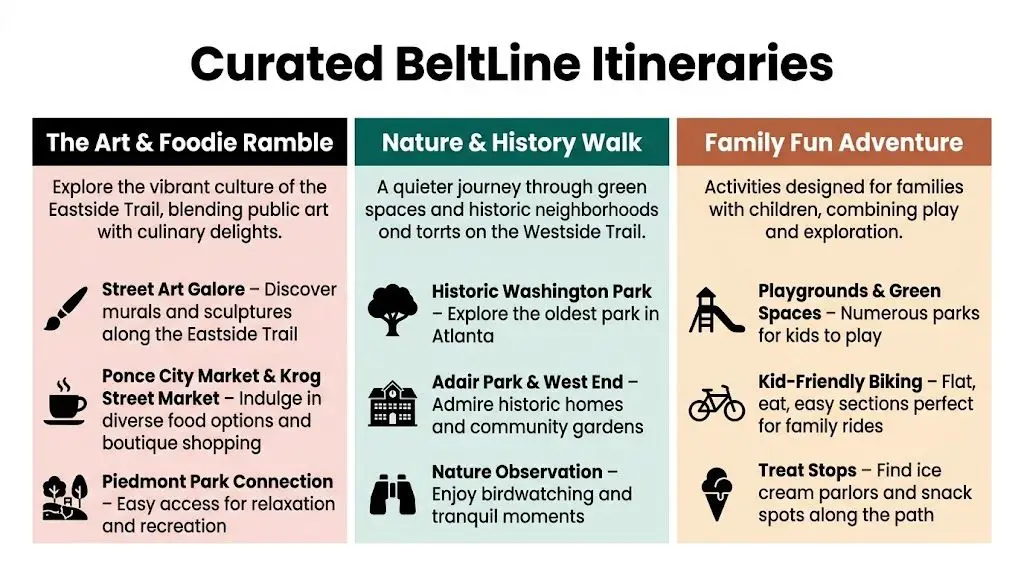
The Art and Foodie Ramble
Start on the Eastside where activity is highest. Walk at an easy pace, stop for murals and installations, then build in time for Ponce City Market or Krog Street Market.
This route works well if you’re hosting out-of-town colleagues or want a casual networking walk that doesn’t feel forced. It also pairs nicely with Atlanta’s startup culture, which is part of why nearby hubs like Atlanta Tech Village in Atlanta GA fit naturally into the city’s innovation map.
- Best for: First visits, social afternoons, informal meetups
- Pace: Slow and stop-heavy
- What to expect: Public art, food options, and steady foot traffic
The Nature and History Walk
Choose the Westside for this one. Go in with fewer agenda items and more curiosity. The appeal here is the feeling of passing through neighborhoods with long memories rather than chasing a checklist.
Good stops include parks, historic residential blocks, and any local business that catches your eye. This is a strong option if you want to understand the city, not just consume it.
The Family-friendly easy outing
Families usually have the best time when they resist doing too much. Pick a flatter stretch, allow room for snack breaks, and treat the day like a loop rather than a march.
- Start simple: Choose one trail access point with nearby green space.
- Add flexibility: Kids often care more about movement and treats than distance.
- Build in breaks: Playgrounds, benches, and shaded stops matter.
- Finish early: The best family BeltLine day often ends before anyone gets tired and cranky.
Shorter routes usually feel more successful than ambitious ones, especially with kids or mixed-age groups.
Supporting a Sustainable and Secure BeltLine Community
Being a good BeltLine citizen starts with small things. Stay aware of bikes. Don’t stop in the middle of the path. Carry out what you bring in. Respect that this space belongs to walkers, runners, families, commuters, artists, and neighbors all at once.
What responsibility looks like on the trail
Trail etiquette isn’t complicated, but it matters. Predictable movement makes shared paths safer. So does basic courtesy.
A few standards go a long way:
- Keep right when moving slowly: It helps everyone pass cleanly.
- Pause off the main path: Photos and conversations are easier when you’re not blocking traffic.
- Protect the space: Litter, damaged landscaping, and careless riding affect everyone else’s experience.
- Think neighborhood-first: Noise, parking behavior, and crowd spillover all affect nearby residents and businesses.
Why off-trail stewardship matters too
The BeltLine also raises a bigger question. What does sustainability mean in a dense urban corridor where homes, offices, clinics, schools, and creative spaces all sit close together?
Part of the answer is responsible material handling. When organizations replace laptops, networking gear, point-of-sale devices, medical equipment, or retired servers, disposal choices affect data security, environmental outcomes, and community trust. That’s especially relevant in areas shaped by ongoing development and infrastructure pressure.
Georgia Tech researchers have described the BeltLine’s network of bridges and tunnels as “vulnerable critical facilities” requiring risk assessment, which is why nearby organizations should think about both physical and digital resilience, as discussed in the Georgia Tech Bridges research summary.
What that means for nearby businesses
If your business operates near the BeltLine, resilience isn’t only about backup generators or insurance paperwork. It also includes what happens when you decommission equipment, relocate offices, or retire storage devices holding regulated information.
That broader sustainability mindset shows up in citywide conversations about reuse and recovery, including Atlanta’s electronics recycling initiatives. Secure IT asset management belongs in that picture because discarded technology can create both environmental and compliance risk if it’s handled poorly.
Frequently Asked Questions About the BeltLine
Is the BeltLine just for long walks
No. A lot of locals use it in shorter bursts. You can hop on for coffee, a lunch break, a bike ride, or a quick neighborhood connection without turning it into an all-day event.
Are bikes and scooters allowed
You’ll regularly see both, but the practical rule is shared-space awareness. Move at a controllable speed, pass carefully, and remember that crowded sections often work better for slower riding than for fast commuting.
Are there restrooms along the way
Yes, but don’t assume they’ll always be exactly where you need them. If you’re planning a longer outing, use major parks, markets, and destination nodes as your restroom anchors instead of relying on the trail alone.
What’s the best time to go
That depends on what you want. Early hours usually feel calmer. Midday is good for food-focused visits. Peak social energy tends to build when the weather is good and people are off work.
Can businesses near the BeltLine use it as part of a logistics plan
In some cases, yes. The corridor already influences access, movement, and commercial planning nearby, and future transit connections could make that even more relevant for organizations managing pickups, service routes, or equipment transitions.
Atlanta’s BeltLine shows how physical space, neighborhood change, and sustainability all connect. If your organization needs secure, compliant help with retired IT equipment, data destruction, or electronics recycling in Atlanta and beyond, contact Beyond Surplus.