Universal waste disposal is a streamlined set of regulations designed to simplify the management of common hazardous items for businesses in Atlanta, GA. Think of it as a compliance express lane for specific waste streams like batteries, old lamps, and aerosol cans, allowing companies to avoid the more complex and costly rules for highly toxic waste. For IT managers, facility managers, and business owners, understanding these rules is crucial for efficient and compliant operations.
This approach is a win-win. It cuts down on paperwork and costs for your business while ensuring these items are handled safely, kept out of Georgia landfills, and managed in an environmentally responsible way. A solid universal waste disposal plan is a cornerstone of modern corporate sustainability and risk management.
What Is Universal Waste and Why It Matters to Your Atlanta Business
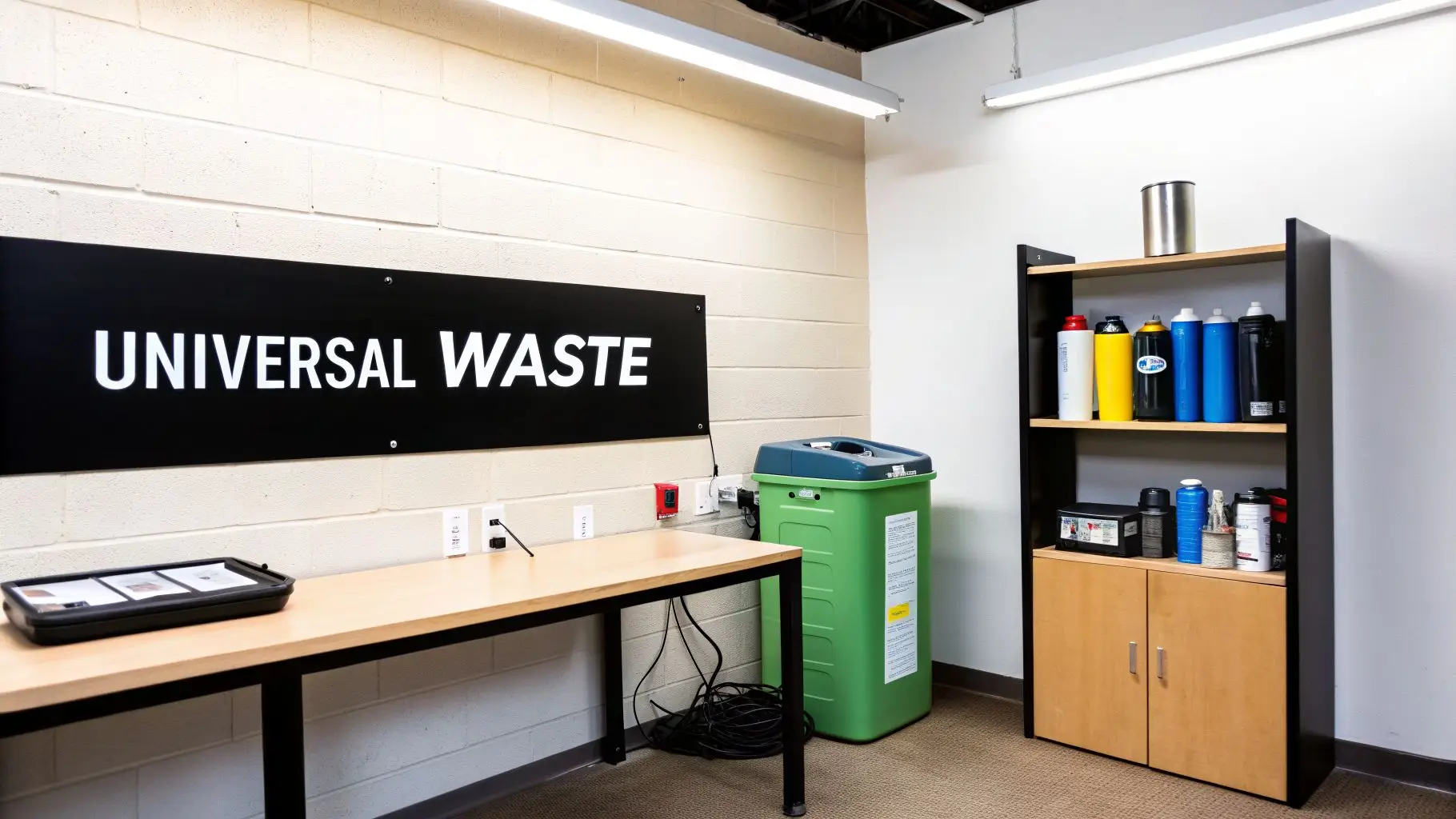
Let’s put this in practical terms for an enterprise setting. Imagine your Atlanta facility generates two piles of waste. One requires a complex, multi-page manifest, has strict short-term storage limits, and demands intensive employee training under RCRA. The other pile? It just needs a basic label, gives you a full year to accumulate it, and uses simpler shipping documents. That’s the real difference between fully regulated hazardous waste and universal waste.
The U.S. Environmental Protection Agency (EPA) created the Universal Waste Program for a practical reason: to encourage businesses to properly collect and recycle specific, widespread hazardous waste. By making the rules less strict, the program helps commercial entities avoid the illegal practice of discarding these items in the trash—a significant compliance risk and environmental hazard.
Key Benefits for Commercial Operations
For any professional managing a facility, data center, or IT assets in Atlanta, mastering these rules isn't just about avoiding fines. It's about running a smarter, more efficient operation. The benefits for your business are tangible.
- Extended Accumulation Time: You can store universal waste on-site for up to one year. That long window gives your business incredible flexibility, allowing for fewer, more cost-effective pickups.
- Simplified Management: The requirements for labeling, storage, and training are far less complex than for other hazardous wastes. That means less time spent on administrative tasks and more focus on core business functions.
- Lower Disposal Costs: Because the handling rules are streamlined, the cost to recycle or dispose of universal waste is often significantly lower than for other regulated materials, directly impacting your bottom line.
- Encourages Corporate Recycling: The entire program is structured to make recycling these items the easiest and most logical choice, helping your company achieve its sustainability and ESG targets.
At its heart, the Universal Waste Program is a practical solution designed for the commercial world. It acknowledges that items like spent batteries and fluorescent bulbs are ubiquitous in business environments and provides a common-sense framework to manage them safely without overwhelming companies with excessive red tape.
The Critical E-Waste Connection for Businesses
Here’s a crucial point for any Atlanta business with technology. While the federal EPA rules do not classify electronics as universal waste, many states do. Georgia, like many other states, has specific regulations that prohibit the disposal of computer equipment and other electronics in landfills, effectively requiring businesses to seek out certified electronics recycling services.
This makes perfect sense from a risk management perspective. Discarded IT equipment—from old laptops to servers—is full of the same hazardous materials, like mercury in screens and lead in solder. A comprehensive universal waste disposal plan must therefore include a strategy for secure e-waste management. The environmental impact of electronic waste is significant, and certified disposal is the only way to responsibly manage it while protecting your business.
The Five Federally Regulated Waste Categories
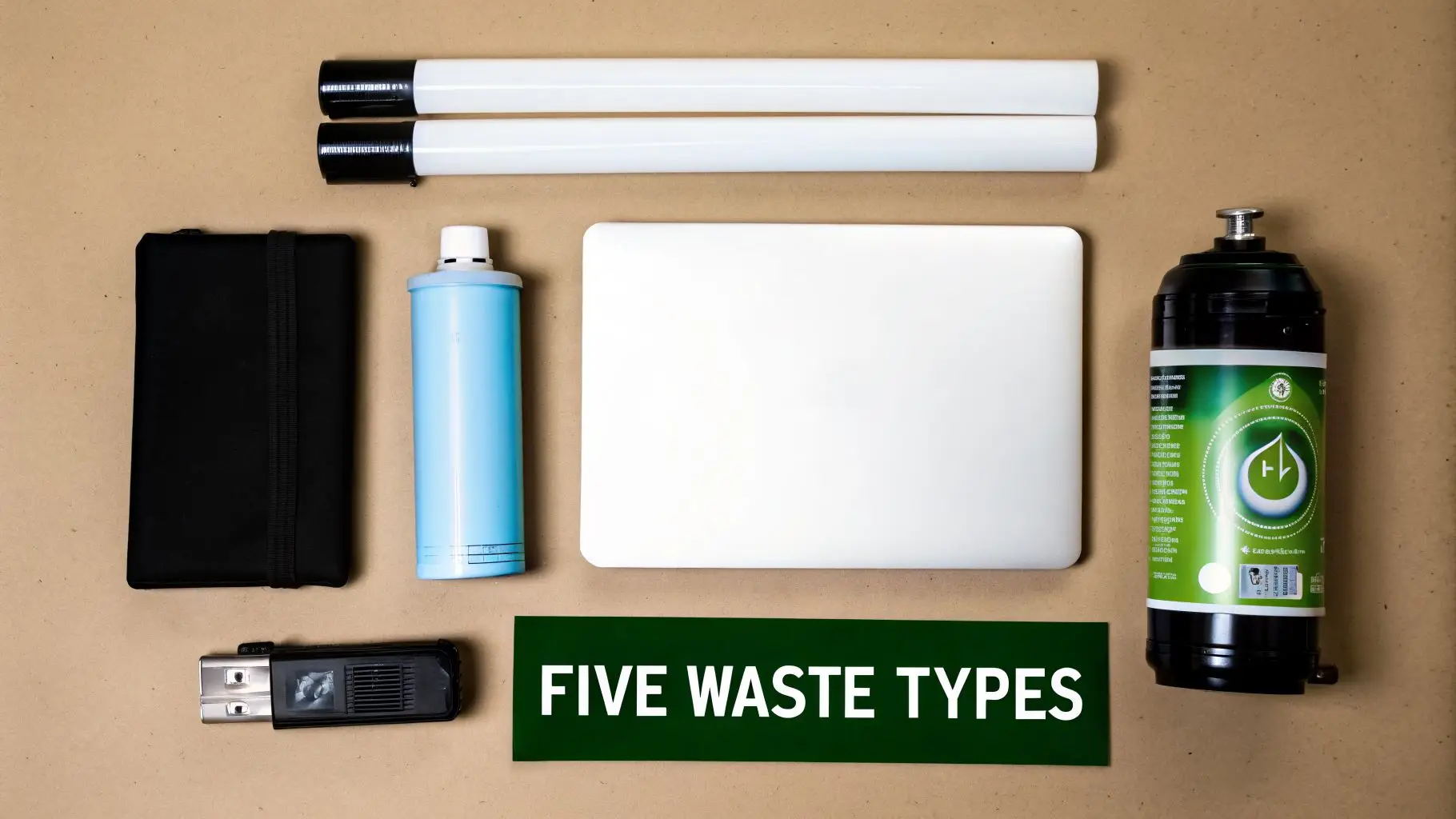
To implement your universal waste program correctly, your team must first know exactly what they’re looking for. The EPA defines five main categories, and understanding what falls into each one is the first step toward handling them safely and in compliance with regulations. This training is essential for facilities, IT, and maintenance staff to prevent these items from being discarded improperly.
Batteries
Batteries are the most common universal waste generated by businesses. The regulations cover a wide range of types, focusing on those containing hazardous materials.
- Common Examples: Nickel-cadmium (Ni-Cd), lithium-ion (found in laptops and medical equipment), sealed lead-acid (used in UPS systems), and mercury-oxide batteries.
- Key Hazard: These batteries can leak corrosive chemicals and pose a significant fire risk, especially lithium-ion types if damaged. For businesses undergoing IT asset refreshes, proper battery recycling and drop-off solutions are a critical component of secure IT asset disposal.
Lamps
Found in nearly every office, data center, and warehouse, lamps (bulbs) are regulated due to their mercury content.
- Common Examples: Fluorescent tubes, compact fluorescent lamps (CFLs), high-intensity discharge (HID) lamps, and neon lamps.
- Key Hazard: When a lamp breaks, it releases mercury vapor—a potent neurotoxin. Proper storage in designated, structurally sound containers is non-negotiable to prevent breakage and ensure workplace safety.
Mercury-Containing Equipment
Beyond lamps, mercury was used in numerous older devices often found during facility cleanouts or data center decommissioning projects.
- Common Examples: Older thermostats, pressure gauges, barometers, and certain electrical switches and relays found in industrial or laboratory equipment.
- Key Hazard: The primary danger is the release of liquid mercury if the item is crushed or broken. A single broken thermostat can contaminate a large area, triggering a difficult and expensive cleanup.
Pesticides
This category is most relevant for businesses in agriculture, landscaping, or large-scale property management. It applies to certain unused or recalled pesticides designated for disposal.
Proper waste management is not just a regulatory chore; it is a fundamental pillar of public health. Mismanaged waste directly contributes to environmental pollution and health risks, a problem that is especially acute with hazardous components found in e-waste like lead and mercury.
The World Health Organization highlights this global challenge. While the U.S. leads in waste generation, its recycling rates lag, emphasizing the need for responsible disposal partners. You can discover more insights on the global waste crisis from the WHO report.
Aerosol Cans
Added to the federal list in 2020, this category covers any aerosol can that is not completely empty of product or propellant upon disposal.
- Common Examples: Cans of spray paint, lubricants, degreasers, and other MRO (maintenance, repair, and operations) products.
- Key Hazard: The primary risks are fire and explosion. If a can is punctured or crushed, the propellant can ignite, creating a serious worker safety issue in a commercial environment.
Understanding Your Generator Status and State Rules
The specific universal waste rules your business must follow depend on the quantity of waste you accumulate on-site. The EPA created a two-tiered system to make compliance practical for companies of all sizes. Determining your status is the first step in creating a compliant disposal program.
Small vs Large Quantity Handlers
The threshold is 5,000 kilograms (approximately 11,000 pounds). This limit refers to the total amount of all universal waste accumulated on-site at any single point in time.
- Small Quantity Handler of Universal Waste (SQHUW): If your business keeps less than 5,000 kg of universal waste on hand, you fall into this category. The rules for SQHUWs are more streamlined and easier to manage.
- Large Quantity Handler of Universal Waste (LQHUW): If your accumulated total exceeds 5,000 kg, you become a Large Quantity Handler. This status brings stricter requirements, particularly for record-keeping and employee training.
Most businesses in Atlanta aim to maintain SQHUW status to simplify compliance. This can be achieved by establishing a regular pickup schedule with a certified electronics recycling partner, ensuring waste is removed before hitting the threshold.
Your generator status dictates your entire waste management strategy. It determines your storage time limits, labeling requirements, and the level of training your staff needs to handle these materials safely and compliantly.
The Patchwork of State-Specific Rules
While federal rules provide a baseline, they are only part of the story. The true complexity of universal waste disposal often comes from individual state regulations. States can, and frequently do, add their own rules. This creates a patchwork of requirements that can be challenging for businesses operating in multiple states.
Electronic waste is the prime example. Federally, e-waste isn't universal waste. However, state laws, including those affecting Georgia businesses, mandate responsible management.
Examples of State-Level Variations:
- California: Known for its broad definition, which includes CRT monitors, TVs, and a wide array of other electronics as universal waste.
- Colorado: Has specific e-waste laws banning many electronics from landfills, forcing businesses to use certified recyclers. Learn more about certified Colorado electronics recycling.
- Minnesota: Treats certain electronics, like TVs and monitors, as universal waste, with specific handling and labeling instructions.
This is why partnering with a knowledgeable ITAD and e-waste vendor is so valuable. A certified partner stays current on the changing rules across all 50 states, ensuring your Atlanta operations and any other national sites remain compliant.
Building Your Step-By-Step Compliance Program
Knowing the rules is one thing; implementing them is another. A successful universal waste disposal program is not about creating bureaucracy but about building a smart, simple system that becomes second nature for your team. This program is your best defense against fines and, more importantly, a demonstration of your company's commitment to corporate responsibility. Here are the steps facility managers and IT directors can take to build a compliant program.
Step 1: Identify and Segregate
The first step is to prevent universal waste from ending up in the regular trash. This starts with clear identification and separation.
- Train Your Team: Your facilities, maintenance, and IT staff need basic training to identify universal waste: batteries from laptops and UPS systems, fluorescent lamps, mercury-containing devices, and aerosol cans.
- Establish Central Collection Areas (CCAs): Designate specific, clearly marked areas for collecting these items. This keeps your facility organized and prevents cross-contamination.
- Use Appropriate Containers: Store waste in sturdy, safe containers. Use fiber drums or strong boxes for lamps to prevent breakage, and place any leaking batteries in a separate, non-reactive container.
Step 2: Implement Proper Labeling and Dating
Under universal waste rules, clear labeling is a core requirement. Every container must be marked to identify its contents and accumulation start date.
- What to Write: Each container must be clearly marked with the words “Universal Waste” followed by the waste type, such as "Universal Waste—Lamps" or "Universal Waste—Batteries."
- Mark the Start Date: You must record the date the first piece of waste was placed in the container. This date starts the one-year clock for disposal.
For Small Quantity Handlers (SQHUWs), proper labeling is a key compliance hurdle. For Large Quantity Handlers (LQHUWs), it is absolutely critical.
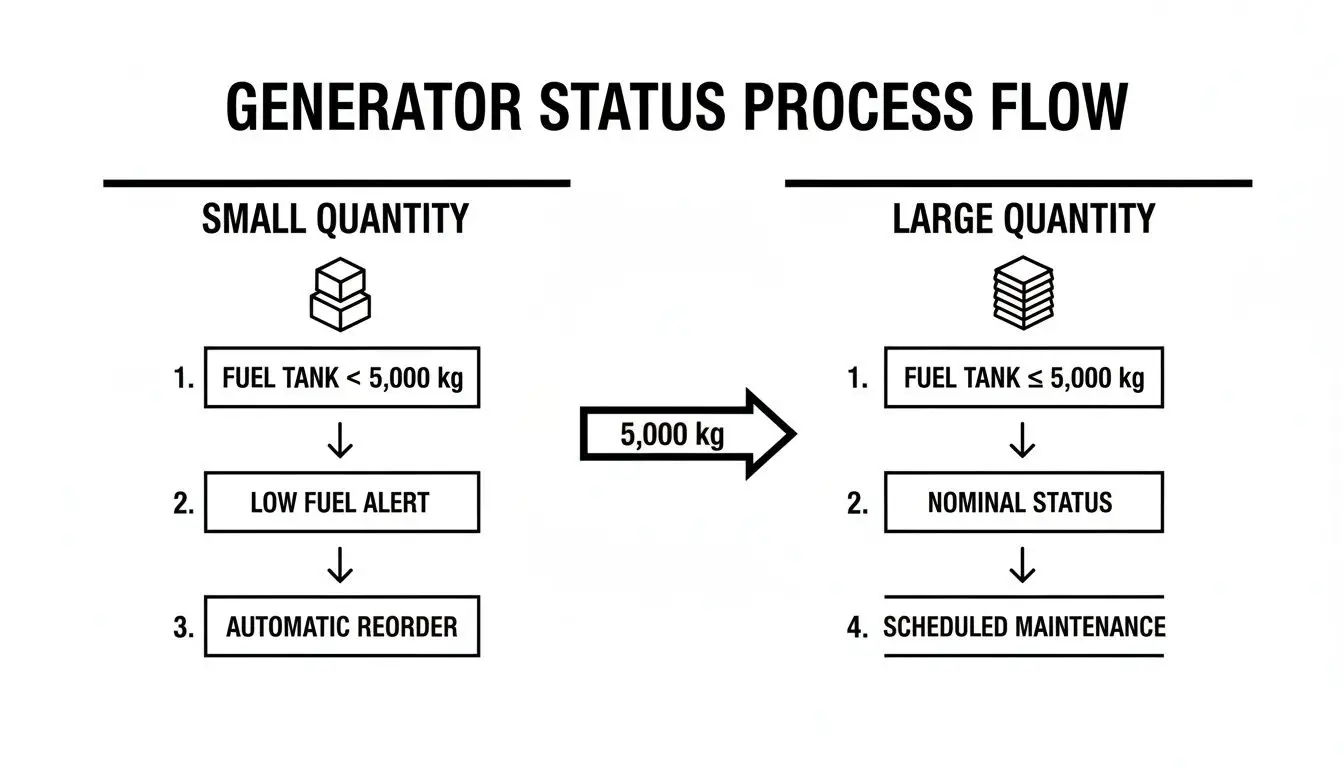
As this flow illustrates, exceeding the 5,000 kg (approx. 11,000 lbs) threshold moves your business into a more regulated category with stricter rules.
Step 3: Manage Accumulation Timelines
The one-year accumulation period is a major benefit, but it requires diligent tracking.
The one-year clock starts the moment the first piece of waste goes into a container. Your labeling system is your primary tool for tracking this timeline and ensuring you schedule a pickup before the deadline expires.
Exceeding the one-year limit is a common and avoidable violation. Set calendar reminders or use an inventory system to monitor the age of your oldest containers and schedule pickups accordingly.
Step 4: Train Employees and Maintain Records
A compliance program is only as effective as the employees implementing it.
- Who to Train: Any employee who handles universal waste needs training on proper identification, safe handling (e.g., what to do if a lamp breaks), and basic emergency procedures.
- What to Document: While SQHUWs have minimal record-keeping duties, LQHUWs must keep detailed logs of all shipments. It is a best practice for all businesses to retain records like a bill of lading or a service report from your vendor to prove proper disposal.
- The Data Security Link: For electronics, these records form a crucial part of your chain of custody and data destruction paper trail. This is vital for complying with standards like the NIST SP 800-88 media sanitization standard.
What About Electronics and E-Waste?
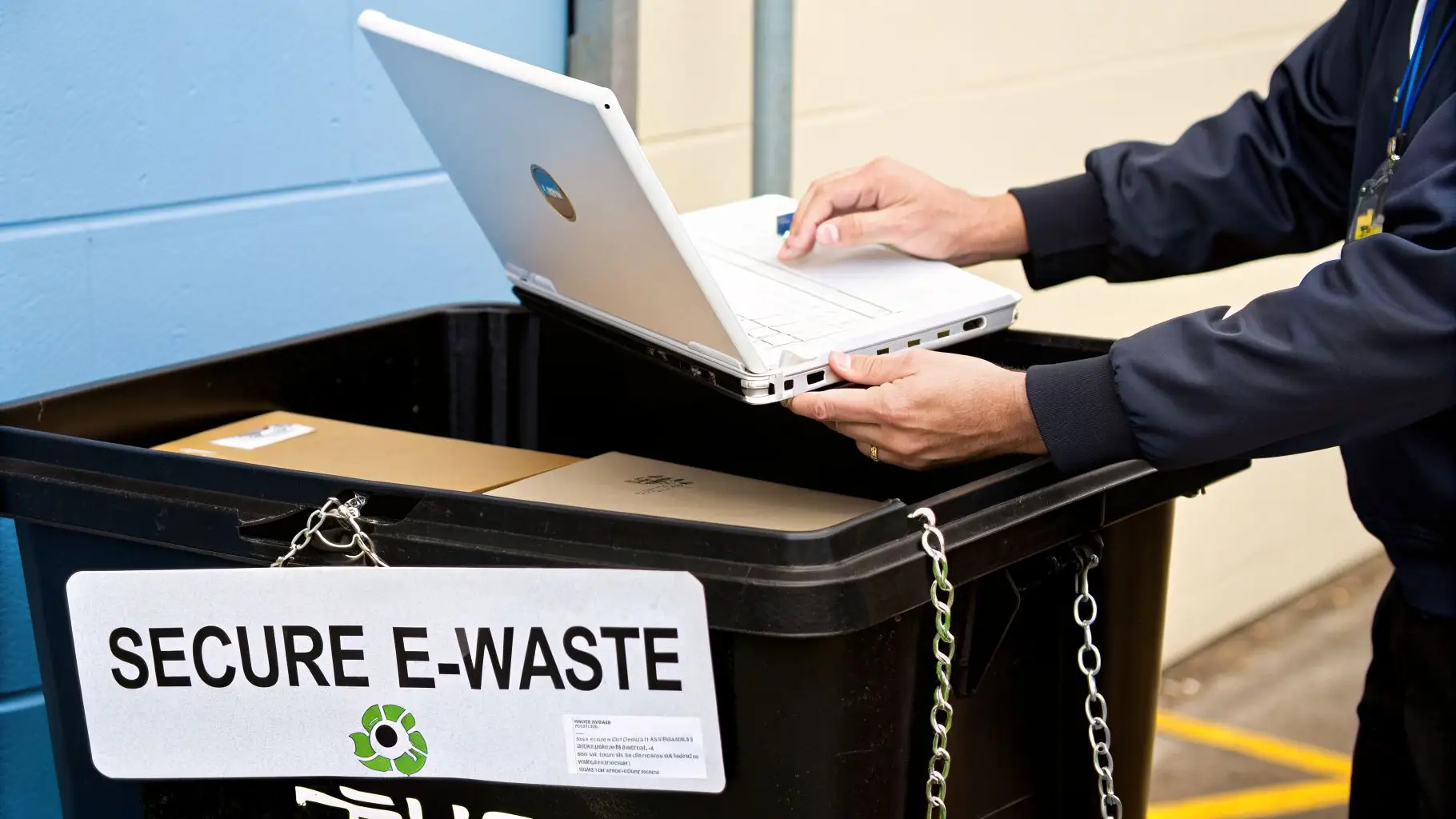
Here's where universal waste rules get tricky. While the federal EPA doesn't officially list electronics as "universal waste," this is not a free pass to discard them. Your company’s old laptops, servers, medical equipment, and monitors are packed with the same hazardous materials—lead, mercury, and cadmium—regulated in other universal waste items.
Due to this, a growing number of states have implemented their own e-waste laws. These state-level rules often treat retired electronics as a special class of waste requiring certified handling, creating a system that runs parallel to universal waste management. Ignoring this creates a major compliance gap for any business.
Why E-Waste Is a Critical Part of Your Program
A universal waste disposal program that only covers lamps and batteries is incomplete for a modern enterprise. Electronic assets pose a dual threat: environmental pollution and data security risks. Disposing of a fluorescent bulb is one thing; disposing of a server that may still hold sensitive customer data or intellectual property is another matter entirely.
This is why a specialized IT Asset Disposition (ITAD) partner is an essential part of your compliance and risk management team. ITAD services are designed to address the full spectrum of risks associated with electronics disposal.
Key ITAD Services Your Business Needs:
- Certified Data Destruction: To comply with regulations like the FTC Disposal Rule and prevent a data breach, all hard drives and storage media must be professionally destroyed via secure data wiping or physical shredding, backed by a Certificate of Data Destruction.
- Secure Chain-of-Custody: You need a documented, unbroken chain of custody from the moment equipment leaves your facility. This provides an auditable trail proving your assets were handled securely through final recycling or destruction.
- Asset Value Recovery: Not all retired IT equipment is waste. A professional ITAD partner can test, refurbish, and resell valuable assets like newer laptops or servers, turning a disposal cost into a revenue stream for your business.
For any business using technology, e-waste must be treated as a high-risk stream. Integrating a robust ITAD strategy into your universal waste program is the only way to cover all your bases, from environmental compliance to the significant legal and financial risks tied to your data.
Connecting Waste Rules and IT Management
The plastic casings on computers and other devices are also part of a massive global waste problem. With worldwide plastic waste projected to grow and a high percentage being mismanaged, recycling these devices through a certified partner is a corporate responsibility.
Ultimately, a smart universal waste disposal plan for your Atlanta business must acknowledge that electronics are unique. The right partner helps you navigate state laws, guarantees data security, and aligns your disposal practices with corporate sustainability goals. A great starting point is to learn how to reduce e-waste and extend your device's life, but for end-of-life assets, a certified ITAD process is essential.
How to Choose the Right Disposal Partner
Choosing a vendor for your universal waste is simple. But selecting a true partner—one who actively shields your business from financial penalties, environmental liability, and data breach risks—requires a more strategic approach. The right partner delivers verifiable compliance and peace of mind, not just a low price.
The wrong choice can leave your company dangerously exposed. The sheer volume of waste generated makes this a high-stakes decision. The United States is projected to be the world's top generator of municipal solid waste, with a significant portion ending up in landfills. This data, from global waste generation trends from Sensoneo, underscores the urgent need for competent waste management partners, especially for electronics.
Look for Non-Negotiable Certifications
The first step in vetting a potential partner is to verify their certifications. These are not just logos; they are hard-earned proof that the vendor meets the highest industry standards for environmental stewardship, data security, and worker safety.
- R2v3 (Responsible Recycling): The premier global standard for electronics recycling, guaranteeing best practices for everything from data security to environmental protection and downstream vendor management.
- e-Stewards: Another highly respected certification focused on preventing the illegal export of hazardous e-waste to developing nations.
A partner with these certifications has already undergone rigorous third-party audits, saving you significant time and effort in your own due diligence.
Demand Downstream Transparency and Data Security
You must know where your assets and waste truly go. A reputable partner provides a clear, transparent downstream trail, documenting how and where every component is processed. Insist on documentation proving that nothing is landfilled.
For electronics disposal, data security is paramount. Your partner must offer certified data destruction services that meet government standards like NIST 800-88.
A Certificate of Destruction is not just a piece of paper. It is your legal proof that your company’s sensitive data has been permanently destroyed and that liability for the physical assets has been transferred. Without it, your business remains liable.
Evaluate Their Integrated Service Model
Finally, a top-tier partner simplifies your operations by handling multiple waste streams. A vendor that can manage your universal waste (lamps, batteries) and your complex IT assets (computers, servers, medical equipment) provides a single point of contact and a unified compliance strategy.
This integrated approach, which we provide at Beyond Surplus, ensures consistency across your program. It also reduces administrative overhead and closes the compliance gaps that often arise when managing multiple vendors. To streamline your evaluation, use our comprehensive vendor due diligence checklist.
Answers to Your Universal Waste Questions
Implementing a universal waste program can bring up many practical questions for your business. Here are clear, B2B-focused answers to common inquiries from facility and IT managers.
Can I Just Toss Universal Waste in Our Company Dumpster?
No. It is illegal to discard universal waste in a standard commercial dumpster. This practice can result in significant fines from the EPA or state environmental agencies.
These items contain hazardous materials that can contaminate soil and groundwater if sent to a landfill. All universal waste must be segregated from your normal trash and sent to a certified recycler or an approved facility equipped to handle these materials safely.
What's the Real Difference Between Hazardous and Universal Waste?
Universal waste is a special subcategory of hazardous waste with simplified, less stringent regulations. The EPA created this "express lane" to make it easier and more cost-effective for businesses to recycle common items like batteries and lamps.
In contrast, fully regulated hazardous waste involves a much heavier compliance burden, including shorter on-site storage limits, complex shipping manifests, intensive employee training, and higher disposal costs. The universal waste program was specifically designed to reduce this administrative burden and encourage proper recycling.
Do My Old Office Computers Count as Universal Waste?
This is a critical distinction. At the federal level, the EPA does not classify electronics as universal waste. However, this is a major area where state laws impose stricter rules.
Many states have laws that either classify e-waste under their universal waste programs or have separate, equally strict mandates that prohibit landfilling. Since electronics contain hazardous materials like lead and mercury, they can never be thrown in the trash. The best practice for any business is to partner with a certified ITAD and e-waste recycler to ensure compliance and data security.
Do I Need a Special Manifest for Shipping Universal Waste?
Generally, a formal hazardous waste manifest is not required for shipping universal waste, which is a key benefit of the program. However, your business is still required to maintain records of every shipment to prove proper management.
These records, such as a bill of lading or a service report from your recycling partner, must show where the waste was sent. A certified partner will provide a Certificate of Recycling or Destruction, which serves as your official proof of compliant disposal and transfers liability away from your company.
Contact Beyond Surplus for certified electronics recycling and secure IT asset disposal in Atlanta, GA. We handle all your universal waste, computer recycling, and data destruction needs with a secure, transparent, and compliant service designed for business. Schedule a pickup today to protect your company from liability and simplify your compliance program.