
Take a look at that storage closet full of old laptops, the fluorescent bulbs in the ceiling, or that box of dead batteries from company keyboards and mice. It’s easy to write these things off as just junk, but they're actually considered universal waste. This is a special category of hazardous waste, and knowing how to handle it is essential for keeping your business out of trouble.
Decoding Universal Waste for Your Business
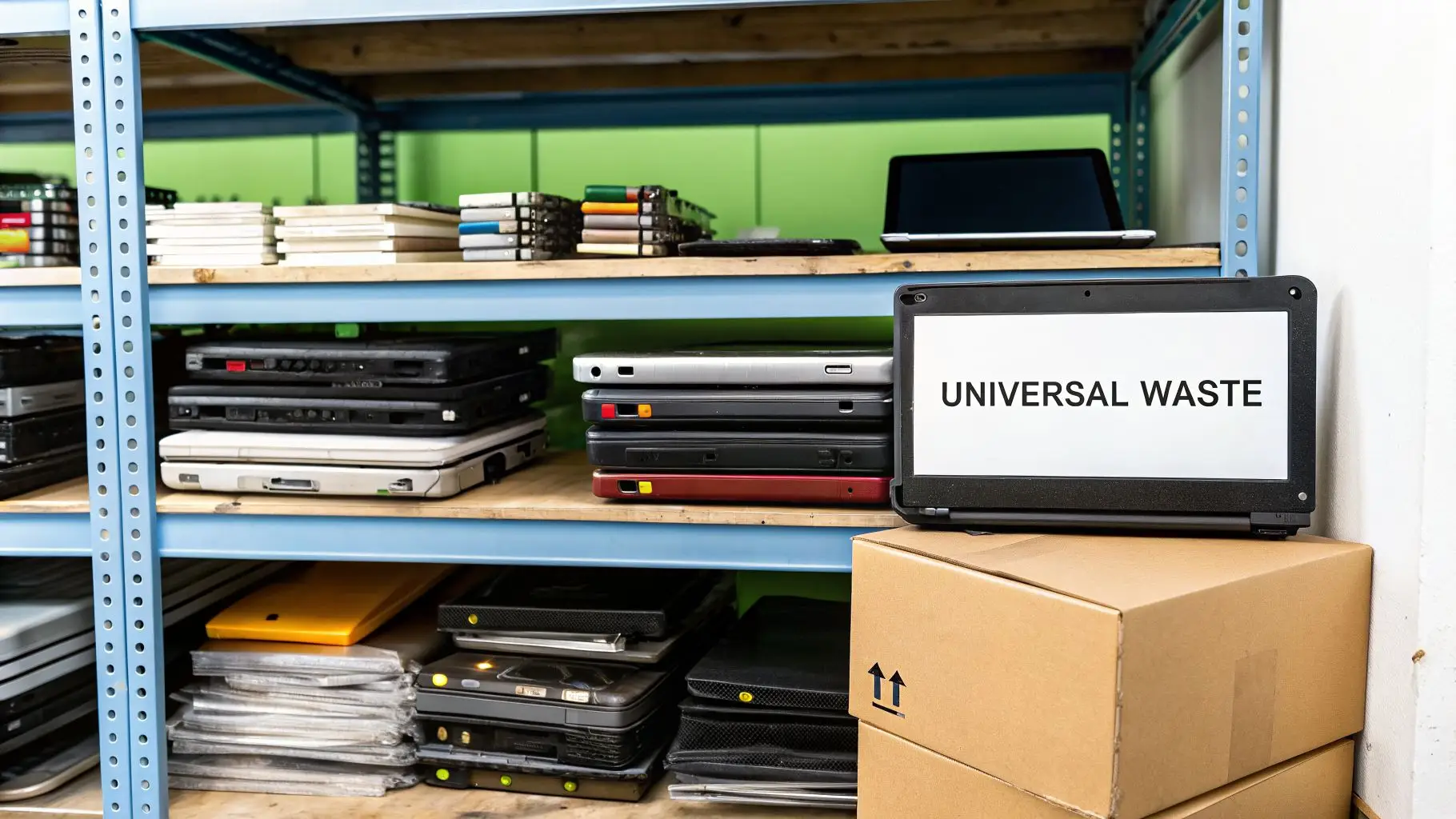
Many facility managers and IT directors are surprised when they learn just how many common office items are subject to strict environmental rules. The U.S. Environmental Protection Agency (EPA) created the "universal waste" category to simplify how businesses manage these widespread hazardous materials.
Think of it as a set of less complicated rules compared to the heavy-duty regulations for other hazardous waste under the Resource Conservation and Recovery Act (RCRA). The whole point is to make it easier for companies like yours to collect and send these items to a certified recycler instead of a landfill. This keeps hazardous materials like lead, mercury, and cadmium from seeping into our soil and water.
Why This Matters for Your Business
Getting universal waste management wrong isn't just bad for the environment—it's a real business risk. Tossing items like old data center UPS batteries, monitors, or even a large batch of laptop batteries into your regular commercial dumpster can lead to some serious fines.
Beyond the financial hit, a violation can do major damage to your company's reputation. Nothing erodes customer trust faster than an environmental misstep. That's why professional waste management isn't just an option; it's a core part of any solid risk management plan. For a deeper dive into compliant handling, check out our guide to universal waste management services.
The sheer volume of waste we produce should be a wake-up call for every business. The U.S. remains a top generator of municipal solid waste, and a huge chunk of that still ends up in landfills. This is especially true for electronic waste, which is a major part of the universal waste stream and is growing faster than almost any other category.
Common Types of Universal Waste in a Business Environment
To help you spot these items in your own facility, we've put together a quick reference table. These are the items Beyond Surplus sees most often when helping businesses manage their retired assets.
| Waste Category | Common Business Examples | Primary Hazard |
|---|---|---|
| Batteries | Laptop batteries (lithium-ion), UPS batteries (lead-acid), and standard office batteries (alkaline, Ni-Cd). | Corrosive materials, heavy metals (lead, cadmium), and fire risk. |
| Lamps | Fluorescent tubes, compact fluorescent lamps (CFLs), and high-intensity discharge (HID) lamps from office or warehouse lighting. | Mercury content, which is highly toxic. |
| Mercury-Containing Equipment | Older thermostats, pressure gauges, medical equipment, and certain types of industrial switches. | Mercury, which can be released if the device is broken. |
| Electronics (E-Waste) | Computers, monitors, printers, circuit boards, and mobile devices. Note: Regulated as universal waste in many, but not all, states. | Heavy metals like lead, cadmium, and mercury. |
Recognizing these items is the first, most important step toward building a disposal program that is both responsible and compliant.
Partnering with a certified IT asset disposal (ITAD) provider like Beyond Surplus takes the guesswork out of the process. We ensure every piece of equipment is handled securely and in line with all federal and state rules, protecting your business and the environment at the same time.
Alright, let's break down what actually counts as universal waste. For any business owner, IT lead, or facilities manager, knowing exactly what’s on this list is the first step to staying compliant and safe.
The EPA groups these items into a few main categories to make things simpler. Think of it like sorting recyclables, but for your business and with much higher stakes. Getting this right isn't just about following the rules—it’s about keeping hazardous materials out of your workplace and the environment.
Batteries: The Hidden Power and Risk in Your Office
Almost every business today is powered by batteries. This category is massive, covering a lot more than just the AAs in your keyboards. From a compliance perspective, the most important ones are probably sitting in your IT closet or data center right now.
- Lithium-Ion (Li-ion) Batteries: These are in every single corporate laptop, tablet, and smartphone. They hold a ton of energy, which also makes them a serious fire hazard if they get damaged or stored improperly.
- Sealed Lead-Acid Batteries: You’ll find these heavy-duty batteries in your data center’s uninterruptible power supplies (UPS), emergency lights, and alarm systems. They contain lead and corrosive acid, so recycling them correctly is non-negotiable.
- Other Chemistries: Don’t overlook the Nickel-Cadmium (Ni-Cd) and Nickel-Metal Hydride (Ni-MH) batteries in older tools and devices, or even the basic alkaline batteries from office gadgets. Each one needs to be managed responsibly.
Separating these batteries by type and taping the terminals on lithium-ion and lead-acid batteries are simple first steps that can prevent short circuits and fires.
Lamps: Shining a Light on Hidden Hazards
Walk through any office building, warehouse, or medical facility, and you'll see lights that fall under universal waste rules. Even with the shift to LEDs, millions of older, mercury-filled bulbs are still in use and need special handling when they burn out.
The main issue here is the mercury content. A tiny amount of mercury from just one broken fluorescent tube is a powerful neurotoxin. Imagine thousands of those breaking in a landfill—that mercury gets into our air and water.
Key Insight: Federal rules state that a business can only store most universal waste, like spent lamps and batteries, for one year. After that, they must be sent to a certified recycling facility. This one-year clock is why having a regular disposal schedule is so important for compliance.
Mercury-Containing Equipment: More Than Just Old Thermostats
When you hear "mercury-containing equipment," old thermostats are probably the first thing that comes to mind. While they are a common example, this category includes a lot of other devices you might find in commercial, industrial, or medical buildings.
This can include:
- Pressure gauges and manometers
- Certain electrical switches and relays in older industrial machines
- Specialized laboratory or medical equipment
Finding these items is a huge part of doing a full universal waste inventory, especially in older buildings with legacy equipment. These devices must be handled with care so the part containing the mercury doesn’t break.
Pesticides: A Quick Note for Facility Managers
This category is less common for a standard office, but it's still part of the federal universal waste program. It mostly applies to businesses in agriculture, landscaping, or large-scale property management. It covers recalled or banned pesticides that a company needs to get rid of.
While most of Beyond Surplus's corporate clients don't deal with this, facility managers overseeing large campuses should know it exists to ensure total compliance.
By getting a handle on these specific categories, you can confidently identify and separate these materials, building the foundation for a secure and legal disposal plan. For more information, explore our comprehensive universal waste disposal services.
Navigating Federal and State Waste Regulations
Trying to manage universal waste can feel like navigating a maze of rules. It isn't a one-size-fits-all game. To get it right, you have to understand a crucial two-tiered system: federal rules and state-specific laws layered on top.
The U.S. Environmental Protection Agency (EPA) sets the ground floor with a federal framework. These rules establish a baseline for what's considered universal waste, which mainly includes batteries, certain pesticides, mercury-containing equipment, and lamps. The whole point is to make it easier and cheaper for businesses to recycle these common hazardous items instead of just sending them to a landfill.
The Critical Role of State-Level Rules
While the federal rules are a solid starting point, things get tricky when you factor in state-level regulations. States can take the federal program and add their own, often stricter, requirements. This is probably the most important detail for any business operating in more than one state.
A state has the power to broaden its definition of universal waste to cover items the EPA doesn't. You can't just assume what's compliant in one state will fly in another. A perfect example of this is how different states treat electronic waste.
Why Electronics Complicate Compliance
On a federal level, electronic waste (e-waste)—think old computers, servers, and monitors—is not classified as universal waste. But many states, including California, Illinois, and New York, have passed their own laws that add e-waste to their state-specific universal waste lists.
This creates a huge distinction for IT and facilities managers:
- In a state that only follows federal rules, your old IT assets might need to be handled as standard hazardous waste, which comes with a lot more red tape.
- In a state that includes e-waste as universal waste, you can manage those same assets under the more straightforward universal waste rules.
This patchwork of laws means a company with a national footprint has to follow different rules for the exact same equipment, all depending on its location. The challenge is made even bigger by the sheer volume of this stuff. For example, the global plastic waste crisis, expected to reach 225 million tonnes in 2026, shows what can happen when a waste stream explodes—a fate we want to avoid with electronics.
Key Takeaway: The most common compliance mistake is thinking federal universal waste rules are the only ones that matter. State regulations aren't optional—they are legal requirements that often go much further than the EPA's baseline.
Making sure your business stays on the right side of the law takes constant attention and a real understanding of local rules. A knowledgeable partner like Beyond Surplus can be a lifesaver here, monitoring regulatory changes across all 50 states to ensure your disposal program is compliant everywhere you operate. For businesses that want the highest standard of accountability, working with a certified recycler is the way to go. You can learn more about why industry standards are so important by exploring what R2 certification means for electronics recycling. This provides an extra layer of assurance that your partner is following the best practices for environmental protection and data security, no matter where they are.
A Practical Playbook for On-Site Waste Management
Properly managing universal waste begins long before a recycler shows up at your door. Creating a clear, on-site playbook is the single most important thing you can do to avoid compliance headaches, safety incidents, and unnecessary costs. Think of it as your daily guide for getting it right from the very start.
Handling these materials correctly on-site isn’t just about checking a box for the EPA; it’s about keeping your workplace safe and running smoothly. When things are disorganized, mistakes happen—like mixing different waste types, which can create real hazards. A good process ensures every person on your team knows exactly what to do.
Segregate Waste Streams Immediately
The first rule for managing waste on-site is simple: keep different types of universal waste separate. It’s a common mistake to toss everything together, but it’s a dangerous one. For example, a single broken fluorescent bulb can release mercury vapor, contaminating an entire bin of batteries and making the recycling process more complex and expensive.
Set up distinct, clearly labeled collection areas for each waste category your business handles.
- Batteries: Have one container just for used laptop, UPS, and alkaline batteries.
- Lamps: Use a separate, puncture-resistant box—often a long cardboard one—for fluorescent tubes and CFLs.
- Mercury-Containing Equipment: Keep items like old thermostats or industrial switches whole and in their own secure bin.
- E-Waste (if your state requires it): Designate a secure spot for retired IT equipment while it waits for pickup.
This simple step is the foundation of a compliant program. It stops cross-contamination and makes sure each type of waste can be recycled correctly by your partner.
Use Correct and Secure Containers
The containers you choose are more than just bins; they're your primary defense against spills, leaks, and breakage. EPA rules require universal waste containers to be solid, compatible with the waste inside, and kept closed unless you are actively adding to them.
A flimsy, open cardboard box is not the right container for heavy lead-acid UPS batteries. A proper container, like a sealed plastic drum, is essential to prevent corrosive acid from leaking and to protect your employees.
For batteries, especially lithium-ion and lead-acid types, it's always a good idea to tape the terminals with non-conductive tape. This easy step prevents short circuits, which are a leading cause of fires in battery collection bins. For lamps, using the original box or a special fiber drum greatly reduces the risk of them breaking.
Master the Art of Proper Labeling
If an inspector ever visits your facility, the first thing they'll check is the labels on your universal waste containers. This is a non-negotiable rule and, unfortunately, one of the easiest places to slip up.
Every container needs to be clearly marked with words that identify what’s inside. The following labels are required:
- "Universal Waste—Batteries"
- "Universal Waste—Lamps" or "Waste Lamps"
- "Universal Waste—Mercury-Containing Equipment"
This flowchart shows how compliance flows from federal rules down to the specific actions a recycling partner takes.
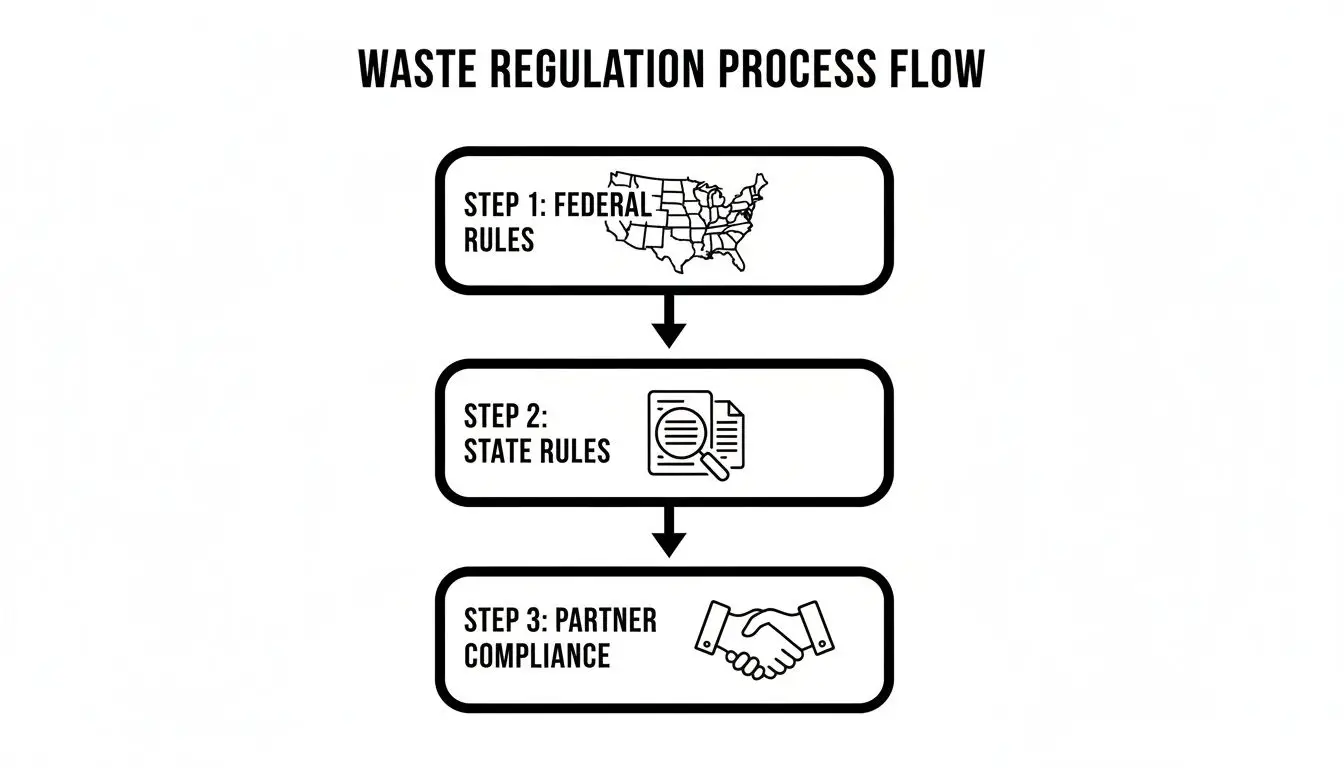
As you can see, federal and state regulations set the stage, but having a compliant partner is what makes safe and legal disposal actually happen.
Track the One-Year Accumulation Clock
Besides identifying the waste type, each container must also be marked with the "Accumulation Start Date." This is the date the very first item was put into that container. Federal law is clear: a business cannot store universal waste on-site for more than one year from this date.
This one-year clock is a critical deadline. To stay on top of it, keep a simple log or spreadsheet tracking the start date for every container. This gives you a clear record and helps you schedule pickups well before time runs out. For businesses that regularly retire equipment, our guide on on-site electronics recycling services explains how to set up routine pickups to make this process almost automatic.
The True Cost of Universal Waste Non-Compliance
What really happens when a business gets universal waste handling wrong? Most people immediately think of a fine from the EPA, but that's just the tip of the iceberg. The actual consequences dig much deeper and can leave a lasting, negative mark on your entire company. Viewing compliance as just another box to check to avoid a penalty is a huge mistake.
A single misstep can trigger a domino effect of financial, legal, and reputational problems. These are real situations that have brought unprepared businesses to their knees. The costs go far beyond the initial fine, creating long-term headaches that are tough to shake.
Steep Legal and Financial Penalties
The most obvious hit from non-compliance is a financial penalty. Fines under the Resource Conservation and Recovery Act (RCRA) can be brutal, as they are often calculated per violation, per day. A single drum of unlabeled batteries or a pallet of old fluorescent bulbs stored past the one-year mark can quickly balloon into tens of thousands of dollars.
But the fines are only where the financial pain starts. The real wallet-buster often comes from the cleanup.
- Environmental Remediation: If mishandled waste like lead-acid batteries or mercury-filled lamps contaminates soil or groundwater, your company is on the hook for the cleanup. These projects can easily run into the hundreds of thousands or even millions of dollars.
- Legal Fees: Fighting an enforcement action from the EPA or a state agency means hiring lawyers. Those fees add up fast, pulling money away from what your business actually does.
- Increased Insurance Premiums: An environmental violation makes you a high-risk client in the eyes of insurers. Expect your premiums to spike, or you could lose your coverage entirely.
The Overlooked Data Security Meltdown
When we're talking about old IT gear, the risk gets even worse: data breaches. Treating old computers, servers, or hard drives like regular office trash means you've completely lost control of the sensitive data stored on them.
Think about it. A box of old company hard drives gets tossed into an unlocked dumpster. If those drives hold customer lists, financial records, or your company's trade secrets, the fallout is devastating. Now, on top of environmental fines, you’re dealing with a major data breach, regulatory penalties, customer lawsuits, and brand damage that you may never recover from.
This is something every IT manager needs to internalize: secure IT asset disposition (ITAD) is a non-negotiable part of universal waste compliance. Treating old electronics as anything less than a major security threat is asking for trouble.
Irreversible Reputational Damage
Today, customers care about how companies behave. A company’s environmental and social responsibility isn't just marketing talk; it's a real factor in earning customer loyalty and building brand value. An environmental mess is a PR nightmare that can destroy decades of trust overnight.
News travels fast, especially bad news. The story of a company getting fined for polluting a local river or exposing a community to hazardous materials is not a story you want told about you. This kind of negative attention can lead to:
- Loss of customers and big clients
- Trouble hiring and keeping good employees
- Damaged relationships with investors and partners
When it comes down to it, the cost of rebuilding a trashed reputation is always more than the cost of a proper disposal program. Working with a certified ITAD partner like Beyond Surplus isn't just an expense; it’s a critical investment in managing risk. It protects your data, your brand, and your bottom line from the catastrophic fallout of getting it wrong.
Putting Your Universal Waste and ITAD Program on the Right Track
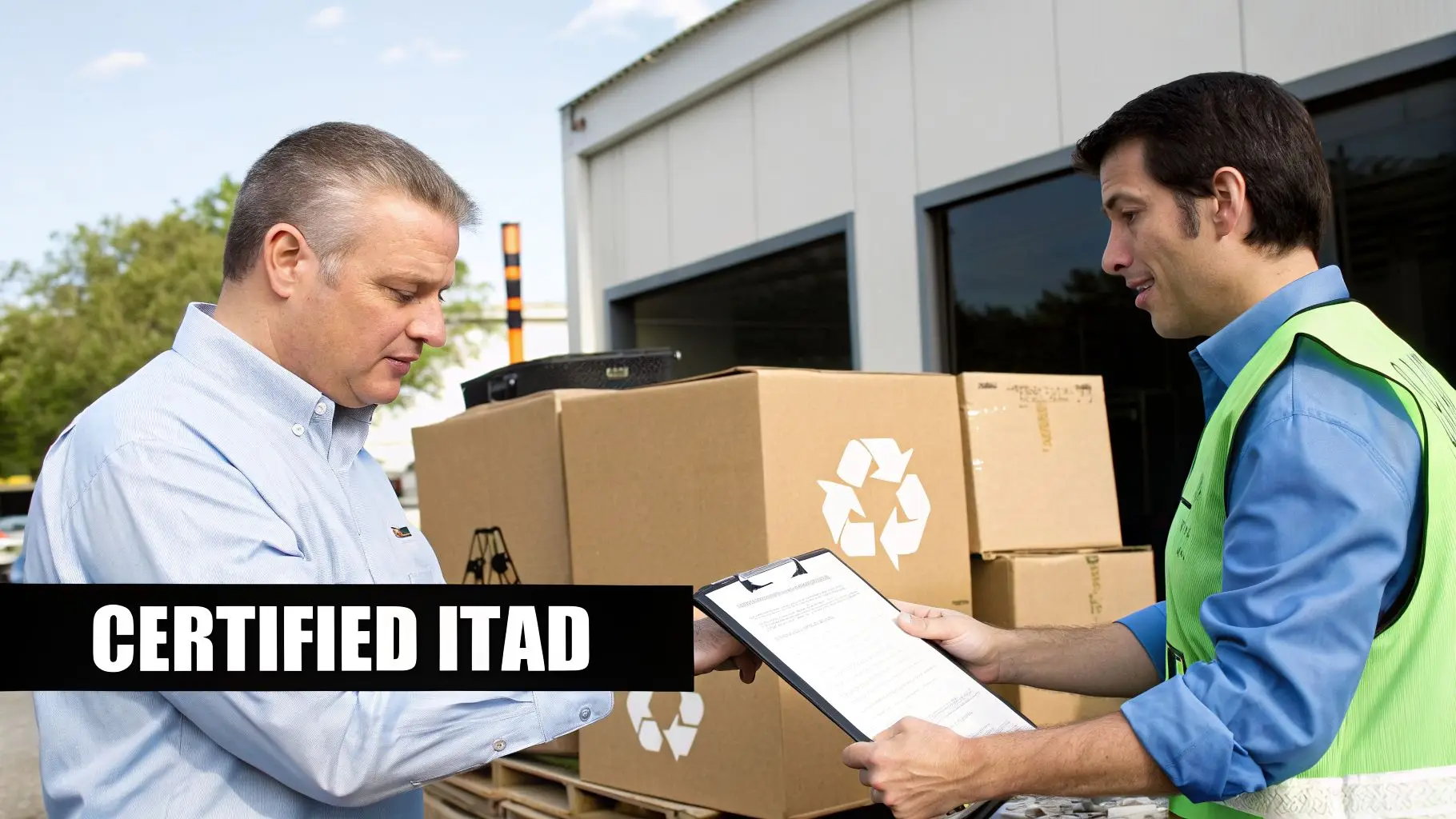
Let’s be honest: figuring out universal waste rules on top of secure IT asset disposition (ITAD) can be a headache for any business. You have a pile of federal and state regulations to follow, and the process can feel overwhelming.
The solution is to find a partner who can manage the entire process from start to finish. A good partner transforms this complicated duty into a simple, provable system.
A solid program is designed for businesses, whether you’re tackling a nationwide data center cleanout or just a routine office refresh. It should cover everything under one roof, creating a single, dependable process for all your end-of-life assets.
Guaranteed Compliance and Risk Mitigation
Working with a professional brings one major benefit: guaranteed compliance. A certified partner like Beyond Surplus makes sure every single item, from a laptop battery to a full server rack, is handled according to all federal, state, and local universal waste laws. This takes the guesswork out of the equation and protects your company from hefty fines.
This kind of partnership offers several key advantages:
- Nationwide Logistics: Whether you have one office or dozens across the country, a single program coordinates everything and keeps you compliant everywhere.
- Certified Data Destruction: For any electronics, certified data destruction is a must. Services like on-site hard drive shredding permanently remove the risk of a data breach from old equipment.
- Complete Chain of Custody: The entire process must be transparent and documented from the moment an asset leaves your hands until its final disposal.
The most critical piece of any ITAD or universal waste program is the paperwork. A Certificate of Recycling and Data Destruction isn’t just a piece of paper—it’s your legal proof that you met your environmental and data security responsibilities.
The Power of Proper Documentation
This documentation creates a complete, auditable trail that proves every asset was managed correctly. It formally transfers the liability from your organization to your certified partner, giving you total peace of mind.
When you know your universal waste and old IT gear have been handled the right way, you can get back to focusing on your business. Before you pick a vendor, it's smart to do your homework. Using a comprehensive vendor due diligence checklist can help you confirm your partner meets all the necessary security and environmental standards.
This step solidifies a relationship that not only keeps you compliant but also strengthens your company's commitment to corporate responsibility.
Your Universal Waste Management Questions Answered
Even with a clear plan, handling universal waste can bring up a few questions for IT directors and facility managers. We get it. Here are some straightforward answers to the most common questions we hear, helping you lock in your compliance strategy.
Can I Throw Universal Waste Like Batteries in the Regular Trash?
Absolutely not. It is illegal to dispose of universal waste in regular commercial trash. Think of these items as a special category of hazardous waste—improper disposal can lead to steep fines and significant environmental liability for your company.
Materials like lead, mercury, and cadmium from batteries and lamps must be handled by a certified facility. This is the only way to guarantee these toxic substances are kept out of our soil and water systems.
What Is the Difference Between E-Waste and Universal Waste?
These two terms are often used together, but they have very different meanings. "Universal waste" is a legal classification from the EPA for specific hazardous waste streams like batteries and lamps, designed to make recycling them easier. On the other hand, "e-waste" is just a general, informal term for any and all discarded electronics.
Here’s the key difference for your business:
- The federal universal waste rule does not cover e-waste.
- However, many states (like California and Illinois) have updated their own regulations to include e-waste under their state-level universal waste programs.
This means that depending on your location, your company's old IT equipment might be managed as universal waste, but not all universal waste (like fluorescent lamps) is considered e-waste.
How Long Can My Business Store Universal Waste On-Site?
Under federal regulations, your business can accumulate universal waste on-site for no more than one year. The clock starts ticking the moment the first piece of waste is placed into a collection container.
This is precisely why properly labeling each container with an "Accumulation Start Date" is so critical for compliance. Setting up a regular pickup schedule with a certified partner like Beyond Surplus ensures you always stay within this legal timeframe, preventing violations and simplifying your entire waste management program.
Managing your company's retired assets and universal waste doesn’t have to be a headache. Beyond Surplus provides secure, compliant, and documented solutions to protect your business.