New York businesses do not operate on the edge of the e-waste problem. They operate inside it. New Yorkers discard over 400,000 tons of e-waste annually, according to the New York State Department of Environmental Conservation, which is why nyc e waste is not just a sustainability topic. It is an operational compliance issue for every IT manager responsible for retired devices, servers, drives, and network gear (New York e-waste regulations overview).
In practice, the challenge is simple to describe and easy to mishandle. Equipment leaves service fast. Offices consolidate. End users swap laptops. Infrastructure teams refresh racks. Then someone has to decide what happens next. In New York, that decision cannot be casual. If your organization treats obsolete electronics like ordinary trash, you create legal exposure, data risk, and avoidable process failure all at once.
The Scale of the E-Waste Challenge for NYC Businesses
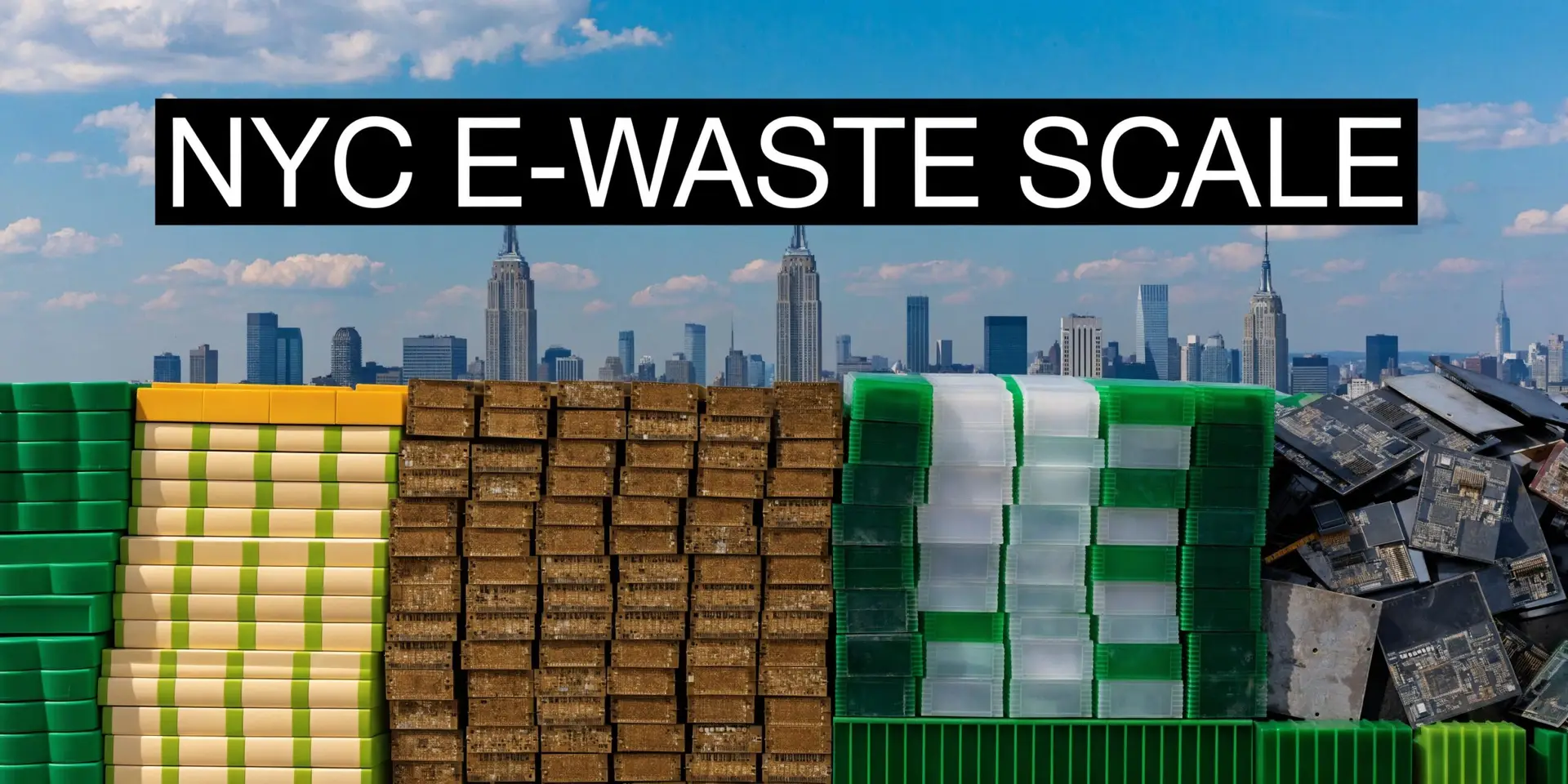
NYC concentrates companies, institutions, healthcare systems, financial firms, schools, and dense office footprints into a small geographic area. That concentration turns routine hardware refreshes into a serious waste stream.
For IT teams, the key point is not only volume. It is volume plus accountability. Retired electronics often contain storage media, regulated data, asset tags, licensed software, and components that require controlled downstream handling. A pile of old equipment in a storage room is not harmless. It is unresolved liability.
Why nyc e waste becomes a business risk fast
A typical disposal backlog in New York grows for familiar reasons:
- Refresh cycles move faster than disposition workflows. New assets arrive before old assets are inventoried and cleared.
- Multiple departments touch the same equipment. IT, facilities, procurement, compliance, and security may each assume someone else owns the final step.
- Space pressure changes behavior. In high-cost office environments, teams want equipment gone quickly. Fast decisions often lead to bad ones.
The environmental side matters, but business leaders usually feel the problem first through governance. If your chain of custody is weak, you cannot prove where assets went. If your data destruction records are missing, you cannot prove what was destroyed. If your recycler is not operating correctly, your organization absorbs the fallout.
A good primer on the broader harm caused by discarded electronics is Beyond Surplus’s overview of the environmental impact of electronic waste. For commercial teams, that environmental issue sits beside security and compliance obligations, not apart from them.
Key takeaway: In NYC, e-waste management is not a housekeeping task. It is part of IT risk management.
What works and what does not
What works is a repeatable business process. Inventory assets. classify devices with storage. separate reusable from scrap-only material. schedule pickups with documented custody. archive final certificates.
What does not work is ad hoc cleanout behavior. Informal haulers, undocumented donations, mixed loading docks, and “we wiped them internally” without records all create holes that show up later during audits, incidents, or internal reviews.
Navigating E-Waste Regulations in New York City

Most confusion around nyc e waste comes from mixing residential options with commercial obligations. Those are not the same thing.
New York’s Electronic Equipment Recycling and Reuse Act bars businesses and organizations from disposing of covered electronic equipment through regular trash or curbside collection. Covered equipment includes business-relevant items such as computers, servers, monitors, cell phones, and storage drives. Commercial organizations need to route those assets through compliant recycling channels.
Where businesses get tripped up
Many managers know the city has visible e-waste programs and assume those options can absorb office equipment too. That assumption causes problems.
NYC’s e-cycleNYC program, launched in 2013, has diverted nearly 11,900 tons of e-waste through FY25, but it is designed for residential buildings and certain limited eligible entities rather than the broader commercial sector that must follow the statewide business disposal ban under EERRA (NYC Zero Waste Report 2025).
If you manage IT for a company, data center, clinic, private school, office tenant, or warehouse operation, do not assume a city convenience program solves your compliance burden. It usually does not.
The practical compliance reading
For a business, the rules translate into a short list of essential requirements:
Do not place covered electronics in regular trash
That includes the “just clear the closet” mentality that often appears during relocations or renovations.Use a compliant recycling pathway
The provider should be able to document how assets move from pickup to final processing.Treat data-bearing devices as security assets first
Recycling without secure destruction is incomplete disposal.Keep your paperwork
Documentation matters as much as the truck arriving on time.
A helpful companion resource on related compliance handling is Beyond Surplus’s page on universal waste EPA requirements, especially for teams that manage multiple regulated waste streams alongside electronics.
Tip: If a vendor cannot explain exactly how business electronics are handled under New York rules, stop the conversation there.
Public program versus commercial workflow
| Disposal path | Good fit | Poor fit |
|---|---|---|
| City residential collection programs | Apartment and household participation | Enterprise device retirement |
| Manufacturer or approved recycling channels | Specific covered equipment streams | Mixed business lots needing audit records |
| Certified commercial ITAD workflow | Offices, labs, healthcare, finance, schools, data centers | None, when documentation and data security matter |
The biggest mistake is choosing a channel based only on convenience. The better approach is to choose based on defensibility. If you had to explain your disposal process to legal, compliance, or an auditor, would it hold up?
Secure Data Destruction A Critical Component of E-Waste Disposal
A retired device is not “waste” until the data issue is closed. Before that, it is a security object with residual risk.
That matters most in NYC environments where organizations handle client records, internal financial data, employee information, contracts, design files, health records, research material, and regulated communications across large device fleets. One missed drive can turn a routine disposal project into an incident response project.
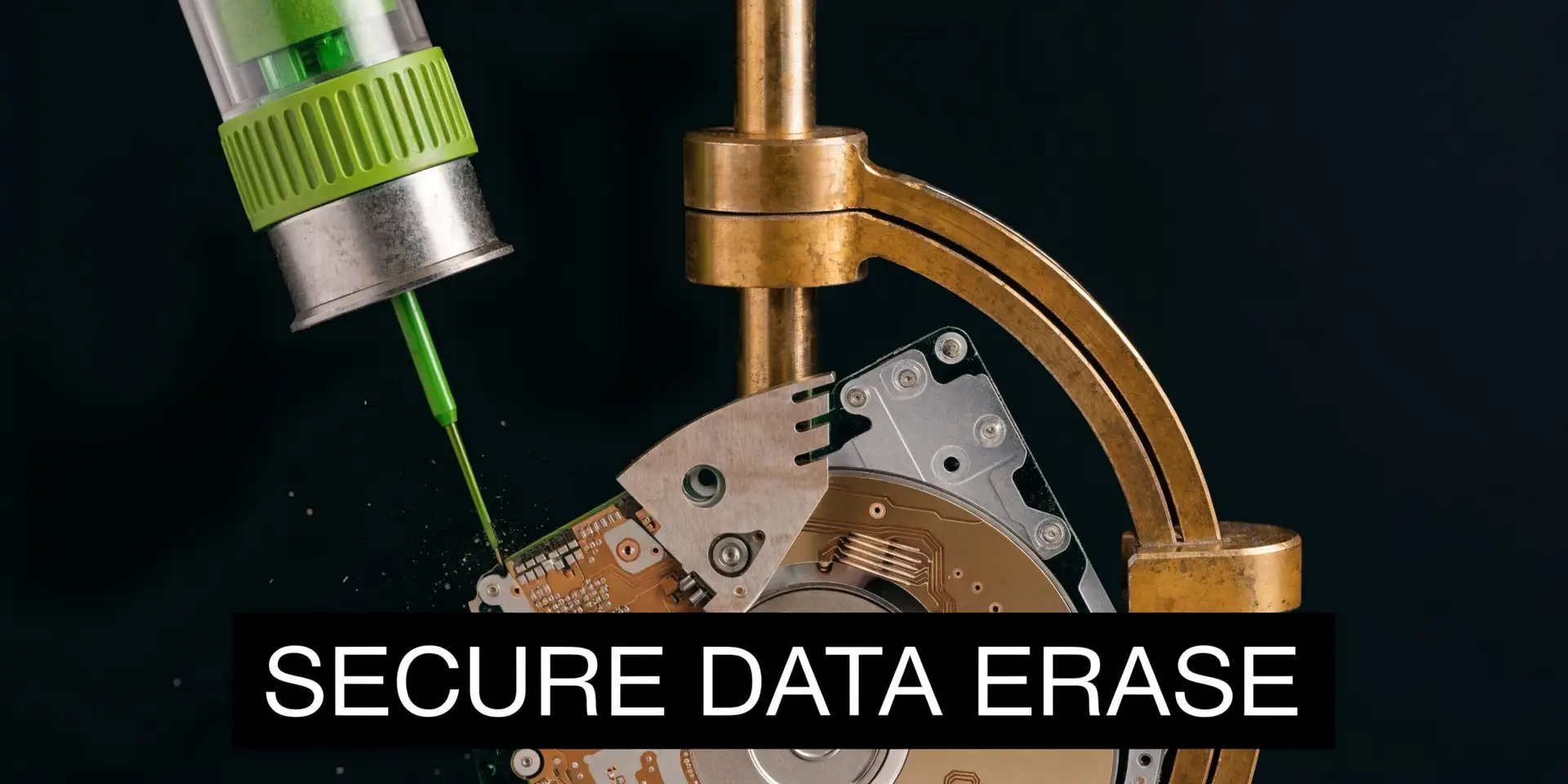
Picking the right destruction method
Different assets call for different methods.
- Software wiping works when the device is functional, the media can be addressed properly, and reuse or resale is still on the table.
- Degaussing can fit certain magnetic media destruction workflows, but it also changes asset recovery options.
- Physical shredding is the clean answer when policy, media condition, or risk posture rules out reuse.
The point is not to memorize methods. The point is to align the method to the asset and to your organization’s control standard. Some teams overuse shredding and destroy recoverable value. Others overuse wiping and apply it to media they should have physically destroyed. Both are process mistakes.
Documentation is the control, not a courtesy
Secure destruction only becomes auditable when the provider documents it. That usually means serialized tracking where possible, intake logging, custody records, and a final certificate that states the destruction work was completed.
For teams aligning with recognized sanitization practices, the NIST SP 800-88 guidance overview is a useful reference point. It helps frame why “we removed the files” is not the same as a defensible sanitization process.
Expert advice: Never separate recycling approval from data destruction approval. The same ticket, inventory, and custody file should govern both.
What fails in real operations
The common failures are familiar:
- drives removed but not logged
- laptops collected in bulk with no asset list
- equipment handed to building staff without custody transfer
- internal wiping claims with no proof
- downstream recycling certificates that say nothing about data destruction
If your organization is subject to privacy, consumer protection, healthcare, financial, or internal governance obligations, secure disposal is part of cybersecurity operations. Treat it that way.
Why Your Business Must Use a Certified ITAD Vendor
The easiest way to spot a weak e-waste partner is to ask operational questions instead of branding questions. Certifications matter, but only when they show up in the actual facility, actual handling process, and actual audit trail.
Under the NYS Electronic Equipment Recycling and Reuse Act, recycling facilities must meet stringent standards, including storing all e-waste in fully enclosed buildings and implementing electronic waste tracking systems. Those are practical proof points a certified ITAD partner should be able to demonstrate (New York compliance and secure IT asset management requirements).
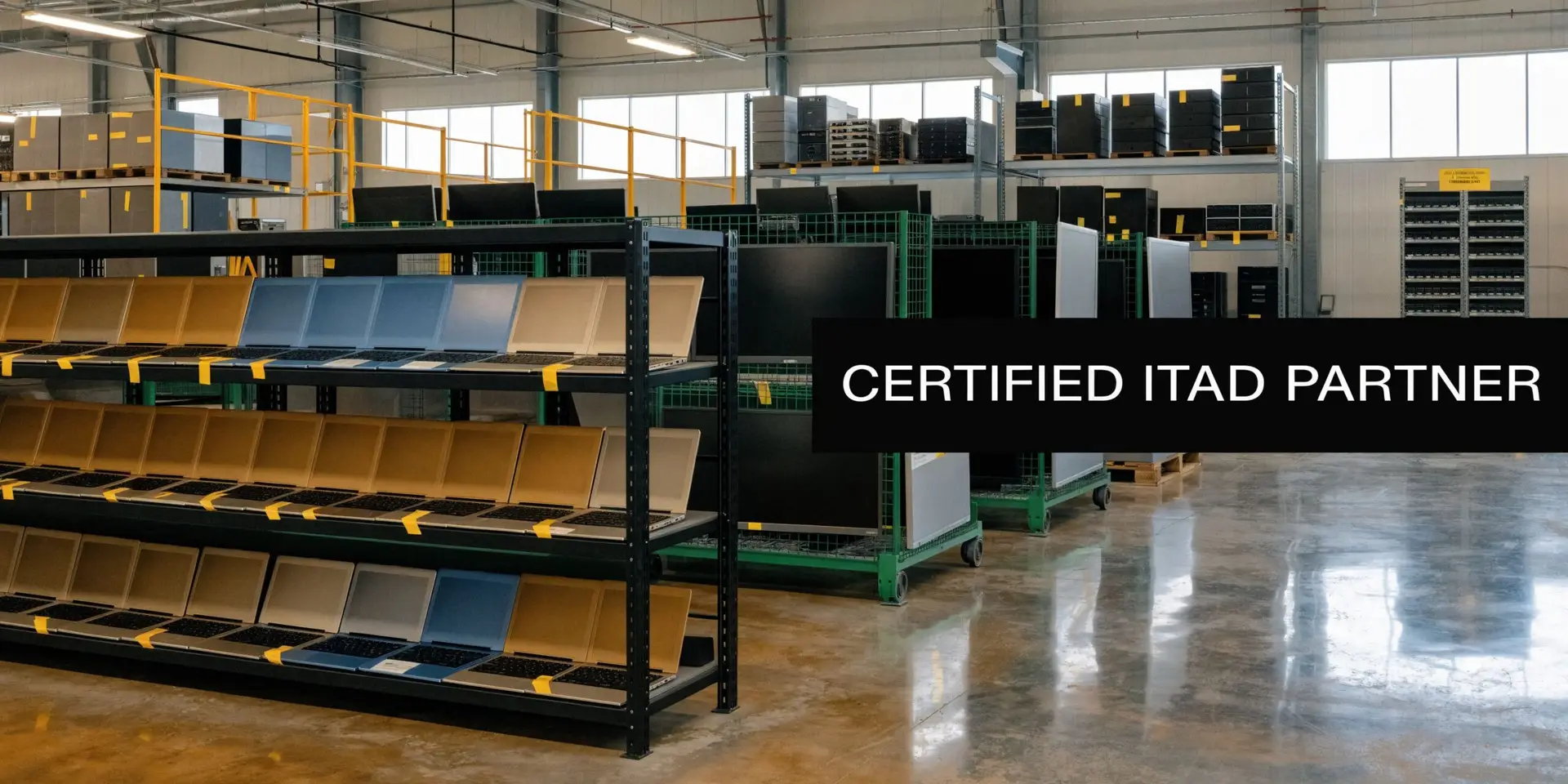
What a qualified vendor should be ready to show you
A credible commercial ITAD provider should answer these questions clearly:
Where is the material stored
If the answer is vague, that is a problem. New York rules point to enclosed storage and controlled handling.How is material tracked
You want a system that records what came in, where it moved, and what happened next.How long can assets sit
Old electronics should not disappear into indefinite warehouse limbo.What paperwork do you receive
Pickup records, settlement details when applicable, recycling certificates, and data destruction certificates should all be standard.
A useful reference for vendor vetting is Beyond Surplus’s page on electronics recycling certification, which helps translate labels and audit language into practical buying criteria.
Certified ITAD versus informal recycling
The gap between a certified ITAD workflow and a low-cost scrap pickup is usually invisible on pickup day. It becomes visible later.
An uncertified operator may still remove the equipment quickly. That speed can fool busy teams. But if they cannot produce custody records, cannot explain downstream processing, or cannot document destruction, your organization is the one left exposed.
Key takeaway: Certification is valuable because it supports verifiable process discipline. It is not just a logo on a website.
A stronger due diligence standard
When evaluating vendors, ask for process evidence, not sales language. Request sample certificates. Ask how serialized assets are handled. Confirm whether pickup crews, transport, warehouse intake, and final processing all sit inside one documented workflow. If the answer is fragmented, assume your risk is fragmented too.
Arranging a Compliant E-Waste Pickup in NYC
A compliant pickup starts before the truck is scheduled. Most failures happen in planning, not at the dock.
For NYC organizations, logistics can be awkward. High-rise freight windows, loading dock restrictions, after-hours building rules, security sign-ins, union environments, and scattered office floors all affect how equipment leaves the site. Good ITAD planning accounts for that early.
The operational workflow that holds up
Start with an internal asset pass.
Build the inventory
List desktops, laptops, monitors, printers, servers, network gear, storage media, phones, and accessories. Identify anything with a hard drive, SSD, or removable media.Split assets by disposition path
Reuse candidates should not be mixed blindly with scrap-only assets. Broken CRTs, damaged gear, and battery-heavy material may need different handling.Confirm the pickup environment
Decide whether the vendor needs dock access, elevators, pallets, carts, liftgate service, or after-hours coordination.Define the data destruction instruction
This should be written before pickup. Do not leave it to verbal handoff.Assign an internal owner
One person should control release, signoff, and file retention.
What to ask before pickup day
Use a short checklist with the vendor:
- Will they provide an asset acknowledgment at pickup
- How are drives or serialized devices tracked
- What packing or staging is expected from your team
- Will they issue certificates after processing
- Who handles exceptions such as damaged media or unlisted items
Some businesses search for public disposal options first, but commercial teams usually need a different route than consumer programs or public electronics drop off locations. Pickup with documented custody is the stronger fit when offices are clearing enterprise equipment.
What good documentation looks like
After the pickup, you should expect records that support internal retention.
| Document | Why it matters |
|---|---|
| Pickup receipt or bill of lading | Confirms transfer of custody |
| Asset list or intake summary | Connects shipment to specific equipment |
| Certificate of data destruction | Proves media sanitization or destruction |
| Certificate of recycling | Confirms final downstream processing |
Archive these records where compliance, security, and procurement can all access them. Too many teams let final certificates sit in one inbox until someone needs them months later.
Tip: If your organization operates multiple NYC sites, standardize one disposal SOP across all locations. Site-by-site improvisation creates record gaps.
What usually causes delays
The problems are predictable. No freight reservation. Equipment spread across floors. Missing internal approvals. Assets still assigned to employees. Storage media discovered at the last minute. Building management unaware of the pickup.
A strong workflow removes those surprises before anyone rolls a cart to the elevator.
Recovering Value from Your Retired Technology
Not every nyc e waste project should end as pure recycling. Some retired technology still has market value, and an ITAD program should separate recoverable equipment from scrap streams before destruction decisions erase that opportunity.
Consequently, many organizations leave money on the table. They treat every decommissioned asset as disposal material, even when some of it is still suitable for refurbishment, resale, or component recovery.
Which assets tend to keep value
Value recovery is strongest when equipment is newer, complete, and functional, or when market demand remains healthy. In practice, that often includes:
- business laptops in reusable condition
- recent servers removed from production but still serviceable
- networking hardware with current commercial demand
- surplus desktops and workstations from standard refresh cycles
By contrast, obsolete peripherals, broken displays, low-demand legacy gear, and heavily damaged equipment usually belong in recycling streams.
Why process discipline affects revenue
The same controls that reduce compliance risk also improve recovery outcomes.
A documented inventory helps identify what deserves testing. Clean device segregation prevents reusable hardware from being damaged during bulk handling. Clear destruction instructions protect you from wiping something that should be shredded, or shredding something that could have been remarketed.
Teams that want a stronger internal framework should review these IT asset management best practices. Good lifecycle discipline upstream makes end-of-life decisions easier downstream.
Key takeaway: The best ITAD programs do two things at once. They reduce risk and preserve residual value where policy allows.
The trade-off to manage
Recovery only works when security rules are clear. If the data risk profile of an asset requires physical destruction, then value comes second. If policy allows certified wiping and remarketing, then resale may offset part of the project cost.
The mistake is letting either side dominate every decision. Security-only thinking can destroy useful value. Revenue-only thinking can weaken control. Mature programs decide asset by asset.
Partner with Experts for Your NYC E-Waste Needs
NYC businesses face a disposal environment that punishes loose process. Covered electronics cannot go out with ordinary trash. Public-facing city programs do not solve most commercial needs. Data-bearing devices require destruction workflows that stand up to scrutiny. Vendor selection has to be based on documented handling, not convenience.
That is why nyc e waste belongs inside formal IT operations. It touches compliance, cybersecurity, facilities coordination, procurement controls, and sustainability goals at the same time. When one part fails, the rest of the process usually feels it.
What strong programs have in common
They do not improvise. They use written inventory methods, approved vendors, scheduled pickups, custody records, destruction documentation, and retained certificates.
They also separate two questions that often get mixed together. First, what must be destroyed to eliminate risk. Second, what can be remarketed to recover value without weakening policy. That distinction is where strong ITAD programs outperform simple hauling arrangements.
The practical decision for NYC IT managers
If you are responsible for retired equipment in New York, the safest path is a partner that can handle logistics, tracking, secure destruction, compliant recycling, and documentation as one controlled workflow. That is what turns disposal from a recurring headache into a managed business function.
The alternative is usually more expensive in hidden ways. Delays, missing paperwork, weak custody, and poorly handled data-bearing assets consume more staff time than a proper process ever will.
For organizations that need certified electronics recycling, secure data destruction, and documented IT asset disposition, contact Beyond Surplus to arrange a compliant commercial pickup and support your NYC e-waste program with defensible chain-of-custody and final reporting.