For businesses in Atlanta, GA, disposing of an old flat screen TV isn't just about clearing out space. It's a critical matter of data security, environmental compliance, and corporate responsibility. Due to sensitive data and hazardous materials within these devices, the only secure method for managing old corporate TVs is to partner with a certified IT Asset Disposition (ITAD) vendor like Beyond Surplus. This approach ensures your Atlanta business achieves guaranteed data security, full environmental compliance, and a documented chain of custody for every asset.
Beyond the Basics: E-Waste Management for Atlanta Enterprises
When your Atlanta-based company decides to upgrade conference room displays or other commercial monitors, you cannot simply place the old units in a dumpster. Disposing of electronics as a business comes with a unique set of challenges carrying significant financial and legal risks.
Modern smart TVs used in corporate settings are essentially large-screen computers. They store Wi-Fi passwords, login credentials for corporate accounts, and cached files from presentations. An improperly discarded TV is a direct vulnerability, offering a potential entry point into your network for malicious actors.
Furthermore, failure to adhere to environmental regulations for e-waste can result in substantial fines. This is why a simple "recycling" plan is insufficient. Businesses require a formal IT Asset Disposition (ITAD) strategy for secure e-waste management.
The Scale of the Corporate E-Waste Challenge
The need for professional IT equipment disposal has never been more urgent. Flat screens and monitors constitute a significant portion of the 62 million metric tons of e-waste generated globally in 2022 alone. According to the Global E-waste Monitor, this volume of electronic waste is increasing five times faster than documented recycling efforts can manage.
Flat screen TVs contain valuable but hazardous materials—including lead, mercury, and rare earth metals—that demand specialized handling to prevent environmental contamination.
Choosing a certified ITAD partner is not an expense—it is an investment in risk mitigation. A documented, secure recycling process protects your business from data breaches, legal penalties, and brand damage associated with improper e-waste disposal.
This is where a certified partner becomes indispensable for any Atlanta business. A professional ITAD service transforms a potential liability into a managed, secure, and compliant process. For a deeper dive into the fundamentals, review our guide on the basics of electronics recycling explained. Partnering with a vendor that understands the complexities of corporate e-waste ensures every TV is handled correctly from the moment it leaves your facility.
At-a-Glance: TV Disposal Options for Businesses
For businesses, the choice of disposal method for old flat screen TVs has significant consequences. The right partner protects your company, while the wrong one exposes it to serious risk. This table breaks down the differences between a professional ITAD service and other common, but risky, approaches.
| Disposal Method | Data Security Risk | Compliance (FTC, etc.) | Environmental Impact | Best For |
|---|---|---|---|---|
| Certified ITAD Vendor | Very Low | Guaranteed | Responsible (Certified recycling, zero-landfill) | Businesses needing documented, secure, and compliant IT asset disposition. |
| Uncertified "Recycler" | High | Uncertain | Questionable (Risk of export or landfill) | Not recommended for any business handling sensitive information. |
| Dumpster/General Waste | Extreme | Non-Compliant | Harmful (Hazardous materials in landfill) | Never an option for businesses due to legal and security risks. |
| Employee Take-Home/Giveaway | Very High | Non-Compliant | Unknown (No control over final disposal) | Extremely risky; transfers liability without solving the core problem. |
As illustrated, the only method that comprehensively addresses the security, legal, and environmental responsibilities of a business is partnering with a certified ITAD provider. It is the professional standard for corporate electronics recycling services.
Securing Your Data Before TVs Leave Your Atlanta Office
Before unplugging an old conference room TV, the most critical step is addressing data security. Modern smart TVs are effectively large-screen computers that store Wi-Fi passwords, user accounts, and cached presentation data, which can become a major security risk if they fall into the wrong hands.
A casual approach to data sanitization can expose your business to significant data breach risks and compliance violations. A factory reset, while a common first step, is dangerously insufficient for any TV used in a corporate environment.
Beyond the Factory Reset: Secure Data Destruction
A factory reset provides a surface-level wipe of user settings but does not guarantee that the underlying data is unrecoverable. With specialized software, determined individuals can often recover residual data, especially from devices that have displayed confidential materials or connected to secure corporate networks.
This is a critical concern for businesses in regulated industries like healthcare or finance, where the mere potential for lingering data can constitute a breach. It is essential to distinguish between clearing the screen and verifiably destroying the data.
- Factory Reset: A basic software function that returns the TV to original settings. It is not a secure method for corporate assets.
- Data Erasure/Wiping: A thorough process using specialized software to overwrite the TV's storage media multiple times, making the original data unrecoverable.
- Physical Destruction: The ultimate guarantee of data security. The memory chips on the circuit board are physically shredded into small fragments, rendering data recovery impossible.
For businesses required to meet strict data protection standards, understanding these methods is non-negotiable. To learn more about a truly secure process, you can review our guide on the NIST SP 800-88 guidelines, the gold standard for media sanitization.
The ideal recycling path for a business prioritizes security at every stage.
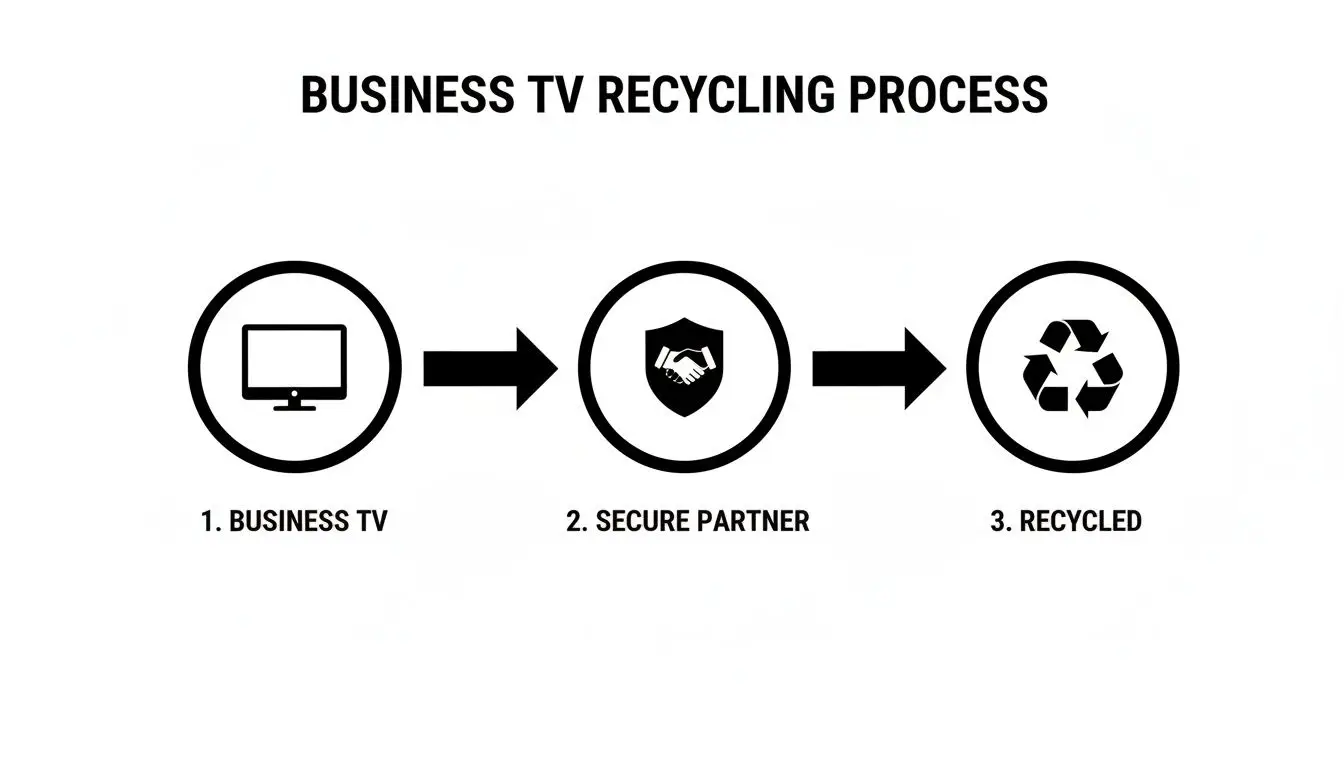
The process is not about simply dropping off a TV; it's about transferring an asset to a secure partner who ensures it is responsibly and verifiably recycled.
Establishing a Bulletproof Chain of Custody
To ensure your TV decommissioning project is controlled and compliant, you need a clear chain of custody. This documentation serves as your proof that every asset was handled securely from your Atlanta office to its final disposition.
A detailed inventory and documented chain of custody are not just administrative tasks; they are your primary defense against liability in the event of a security incident or compliance audit.
Begin by creating an inventory list before any TVs are moved. Each asset requires a clear entry, including:
- Asset Tag Number
- Serial Number
- Brand and Model
- Location (e.g., "Conference Room 3B" or "Lobby")
This detailed record is the foundation for the Certificate of Data Destruction and Recycling you will receive, which formally transfers liability and confirms your due diligence.
Navigating the Complex Rules of E-Waste Compliance in Georgia

When your business recycles a flat-screen TV in Atlanta, it's about more than just equipment disposal—it's about compliance. The legal framework surrounding e-waste is detailed, and for any company, ignorance of the law is not a valid defense.
Federal regulations like the FTC Safeguards Rule are paramount. They mandate that companies protect customer and client information, which absolutely includes data on smart TVs used in offices, conference rooms, or lobbies. Failure to properly sanitize that data before disposal can lead to serious fines and reputational damage.
The Critical Role of Certifications
This is why businesses should only partner with a certified e-waste recycler. Certifications are not just logos; they are your proof that a vendor meets the highest industry standards for both data security and environmental responsibility.
Key certifications to look for include:
- R2v3 (Responsible Recycling): The gold standard in electronics recycling, guaranteeing that all materials are handled in an environmentally sound manner and that all downstream partners are also certified.
- e-Stewards: Similar to R2, the e-Stewards standard is focused on preventing the illegal export of hazardous e-waste and demands the highest level of responsible management.
- NAID AAA Certification: This certification is focused on data destruction. A vendor with NAID AAA Certification has passed rigorous, unannounced audits verifying the security of their processes, employee screening, and destruction methods.
These certifications are your shield against the liabilities associated with data breaches and environmental non-compliance. You can learn more from our overview of recycling laws around electronics waste.
A Real-World Compliance Scenario
Imagine a hotel chain in Atlanta upgrading the TVs in hundreds of guest rooms. Each smart TV could hold guest Wi-Fi details and streaming app login information. A simple factory reset is insufficient. If even one of those TVs is improperly disposed of and data is compromised, the hotel faces a data breach, regulatory fines, and a public relations crisis.
By partnering with an R2v3 and NAID AAA certified recycler, the hotel ensures every single TV's data is verifiably destroyed. The recycler provides a Certificate of Data Destruction and a Certificate of Recycling, which serve as legal proof that the hotel fulfilled its due diligence.
This documentation is your key defense. It formally transfers liability away from your business and proves your commitment to corporate responsibility.
Choosing the Right ITAD Partner for Your Atlanta Business
Once you understand the importance of data security and compliance, the focus shifts to selecting the right partner. Choosing an electronics recycling vendor is a critical decision for any IT manager or business owner. It is the difference between simply disposing of hardware and executing a secure, documented, and fully managed IT asset disposition program.
A generic drop-off service or uncertified recycler is not equipped to handle the risks of corporate e-waste. This is where a true IT Asset Disposition (ITAD) provider like Beyond Surplus excels. We don't just offer electronic waste pickup; we function as an extension of your security and compliance teams.
Evaluating a Vendor's Core Capabilities
When vetting potential partners, their logistics and security infrastructure should be top priorities. A premier provider manages the entire chain of custody with precision and accountability.
Key capabilities to look for:
- Secure Nationwide Logistics: A provider with its own fleet and vetted transportation partners guarantees a secure chain of custody from your Atlanta facility to theirs, whether for a local pickup or a complex multi-site project.
- On-Site Services: For maximum security, inquire about on-site data destruction. Having hard drives and other media physically shredded at your location provides unparalleled peace of mind.
- Certified Processes: Your partner must hold certifications like R2v3 and NAID AAA. These are your proof of their commitment to responsible recycling and airtight data security.
The right ITAD partner is a strategic asset, not a disposal service. They provide the infrastructure, security, and documentation needed to transform a potential liability into a managed, compliant, and risk-free process.
Critical Questions for Potential Partners
To ensure you select a vendor that can genuinely protect your organization, ask questions that go beyond a price quote. Just as you might research top IT outsourcing companies for specialized projects, the same diligence applies to ITAD.
Use this checklist to screen potential partners:
- Insurance Coverage: What are your liability limits for data breach and general liability coverage?
- Security Protocols: Can you describe your facility’s security measures, including surveillance, access controls, and employee background checks?
- Reporting Detail: What does a standard Certificate of Destruction look like? Can you provide serialized reporting that tracks each individual asset?
- Downstream Vendor Management: How do you audit your downstream recycling partners to guarantee compliance throughout the entire process?
A capable partner will provide clear, confident answers. For more on the full scope of these services, explore our guide on what IT Asset Disposition is.
The True ROI of Responsible TV Recycling
When Atlanta businesses need to recycle a flat-screen TV, the conversation often centers on upfront cost. However, focusing solely on fees is shortsighted. The real discussion should be about the return on investment (ROI) of a secure, compliant process. The hidden expenses of improper disposal—from regulatory fines to brand damage—can easily dwarf any initial recycling fee.
In contrast, a professional, certified recycling program delivers tangible returns and mitigates significant risks.
Maximizing Value and Minimizing Risk
The most direct financial return often comes from IT asset buyback programs. Newer commercial displays and smart TVs frequently retain significant market value. A strategic ITAD partner can refurbish and resell these assets, generating revenue that can offset or even exceed your recycling costs. We regularly help companies leverage asset recovery services to turn surplus equipment into a positive budget item.
Beyond direct financial returns, the environmental benefits are substantial. Flat-screen TVs are complex devices filled with both hazardous materials and valuable resources ripe for recovery.
"A professional ITAD program transforms an operational chore into a strategic win. It’s not about spending money to get rid of old TVs; it’s about investing in security, compliance, and brand reputation while recovering tangible value."
The Economic and Environmental Impact
The materials inside a modern flat-screen TV make it an e-waste goldmine. They contain precious metals like gold and silver in their circuit boards, as well as valuable elements like indium in display panels. The global push to recover these materials is fueling a massive e-waste recycling market. For IT managers in Atlanta, GA, this trend creates a clear economic incentive for choosing the right disposal partner.
To put the stakes in perspective, let’s compare the outcomes of professional recycling versus improper disposal.
Economic & Environmental Impact of Recycling Methods
| Metric | Certified ITAD Partner (e.g., Beyond Surplus) | Improper Disposal (e.g., Dumpster, Uncertified vendor) |
|---|---|---|
| Financial Outcome | Potential revenue from asset recovery; predictable costs. | Risk of heavy fines; no value recovery; potential liability costs. |
| Data Security | Certified data destruction; full compliance documentation. | High risk of data breaches; no chain of custody. |
| Brand Reputation | Positive ESG story; enhanced corporate image. | Risk of negative press; damage to brand trust. |
| Environmental Impact | >95% of materials recovered; prevents pollution. | Contributes to landfill waste; leaches toxic materials. |
| Compliance | Guaranteed compliance with all federal, state, and local laws. | High risk of non-compliance and legal penalties. |
As the table shows, the choice has a clear and measurable impact on your business. By choosing a certified recycler, you align your operations with your company's ESG (Environmental, Social, and Governance) goals, demonstrating a real commitment to sustainability.
Your Business Recycling Questions Answered
When managing a business's electronics in Atlanta, questions about logistics, security, and cost are common. Disposing of old flat-screen TVs seems simple, but getting it right involves important details. Here are answers to the most common questions from IT managers and facility coordinators.
Can Our Business Just Drop Off a Few Flat Screen TVs?
While Beyond Surplus can sometimes accommodate small drop-offs, scheduled pickups are the gold standard for any business, regardless of size. This is because a scheduled electronic waste pickup establishes a secure, documented chain of custody from the moment the TVs leave your building. We handle nationwide pickups, from a handful of screens at a single Atlanta office to a complete asset refresh for a multi-site corporation, ensuring a secure and efficient process.
What Documentation Should We Expect After Recycling?
Documentation is your legal proof of compliance. After your flat-screen TVs are processed, you should always receive two key documents:
- A Certificate of Recycling: This confirms your equipment was handled in line with all environmental regulations.
- A Certificate of Data Destruction: This is your legal verification that any data-storing media was professionally sanitized or destroyed according to NIST 800-88 standards.
A reputable ITAD partner like Beyond Surplus also provides serialized reporting, creating a detailed audit trail that formally transfers liability from your organization to ours.
Is There a Cost for Business TV Recycling?
Yes, professional electronics recycling for businesses involves costs for secure transportation, manual dismantling, certified data destruction, and safe handling of hazardous materials. Think of it as an investment in risk mitigation.
A factory reset is simply not enough for corporate devices. It's a consumer-level feature that leaves recoverable data behind, exposing your business to significant risk. Only certified data destruction guarantees your company's information is irretrievably gone.
However, if your flat-screen TVs are newer and have market value, an IT asset recovery program could be an option. Revenue generated from reselling the equipment can often offset or even cover recycling fees, turning a cost into a financial return.
Is a Factory Reset Enough to Secure Our Smart TVs?
Absolutely not. For a TV used in any corporate setting, a factory reset is dangerously inadequate. This function is designed for home users and can leave behind data fragments like Wi-Fi credentials, which can be recovered with forensic tools, creating a major security vulnerability. Businesses require guaranteed data destruction from a certified ITAD provider, achieved through advanced software that meets NIST 800-88 standards or through physical shredding for maximum security.
Contact Beyond Surplus for certified electronics recycling and secure IT asset disposal in Atlanta, GA. We offer nationwide pickups, certified data destruction, and detailed reporting to protect your business. Contact us today to schedule your pickup.