
For businesses across Colorado, from the tech corridors of Denver to corporate offices in Colorado Springs, managing end-of-life IT equipment is more than just spring cleaning—it’s a matter of state law and data security. In 2013, Colorado enacted a strict landfill ban on electronic waste. For commercial entities, this means you cannot legally dispose of old computers, servers, monitors, or phones in your standard commercial waste stream. This regulation is a foundational aspect of corporate compliance in the state.
Why Colorado Electronics Recycling Is a Business Imperative
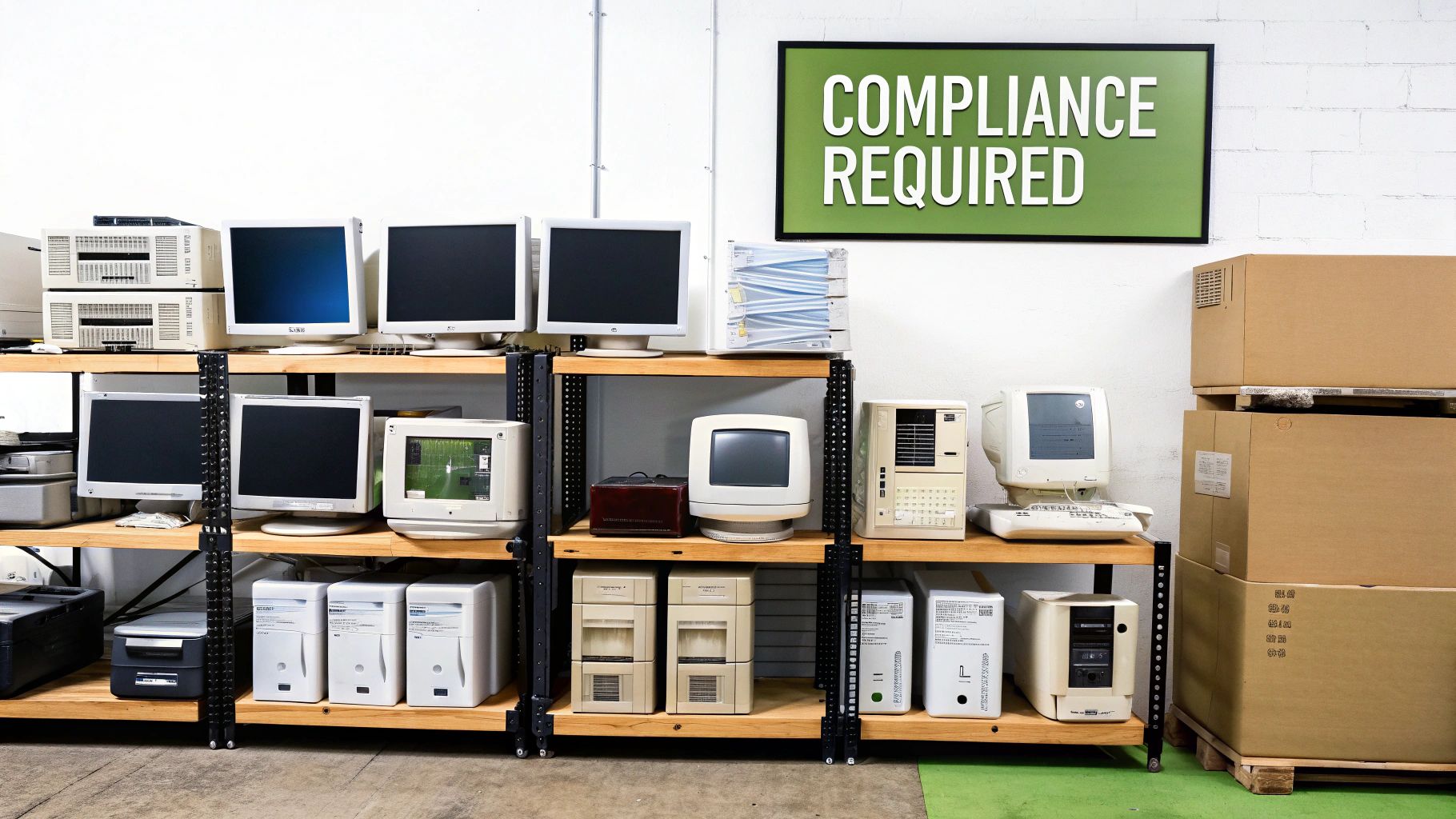
That aging server rack or stack of obsolete laptops isn't just outdated technology; it's a compliance risk. The Colorado Electronic Recycling Jobs Act was designed to prevent hazardous materials like lead and mercury from contaminating local soil and water. While the law applies to everyone, the operational, financial, and reputational stakes are significantly higher for businesses.
The Scope of the Landfill Ban
Colorado's e-waste ban is comprehensive, covering the full range of electronic devices standard in any corporate environment. Non-compliance can lead to significant fines and legal repercussions. The list of banned items includes virtually everything with a plug or battery:
- Computers and Laptops: Desktops, towers, and portable computers.
- Data Storage Devices: Servers, external hard drives, network-attached storage (NAS), and flash drives.
- Peripherals: Keyboards, mice, printers, scanners, and multifunction devices.
- Display Devices: CRT and flat-screen computer monitors, as well as televisions.
- Communication Equipment: Mobile phones, office phone systems, and tablets.
Given this extensive list, every piece of technology your company utilizes requires a documented and responsible disposal strategy at its end-of-life.
Beyond Environmental Compliance
For any Colorado business, the conversation around electronics recycling must extend beyond environmental stewardship. The real-world risks of improper disposal are both financial and reputational. Critically, every retired device is a potential data breach waiting to happen. That decommissioned hard drive could still contain sensitive client information, proprietary corporate data, or employee records.
Partnering with a certified IT Asset Disposition (ITAD) provider is no longer a "best practice"—it's an essential risk management strategy. A professional ITAD service ensures your organization not only complies with state law but is also insulated from the catastrophic consequences of a data breach.
Ultimately, understanding the importance of electronics recycling is the first step. The goal is to transform a legal obligation into a strategic business process that protects your data, your brand, and your bottom line.
Understanding the E-Waste Challenge in Colorado
Obsolete servers or pallets of outdated laptops are more than just an inventory problem. They are part of a massive, growing stream of electronic waste—a significant challenge for businesses throughout Colorado. When electronics are disposed of improperly, they become a long-term liability, leaching hazardous materials into the environment and creating significant risks to public health and corporate reputation.
For any business, this is not merely an environmental issue; it’s a critical matter of regulatory compliance and brand integrity. A single improperly disposed device can contain toxic heavy metals like lead and mercury, which are highly damaging to local ecosystems. You can learn more about what different toxic metals are found in e-waste in our detailed guide. Proper management is a core component of modern corporate social responsibility (CSR).
The Scale of the Problem
The challenge of managing e-waste in Colorado is substantial, demanding a proactive approach from the business community. Despite state-level efforts, the data reveals an ongoing struggle.
In 2023, Colorado diverted nearly 12,000 tons of electronics from landfills. While significant, this represents a concerning decline from the 17,000 tons recycled in 2018, highlighting the mounting challenges in managing e-waste despite the statewide landfill ban.
This data points to a critical gap that businesses are uniquely positioned to address. You can read more about Colorado's electronic recycling efforts and challenges to understand the broader context.
Connecting Recycling to Corporate Reputation
In today's competitive market, clients, partners, and employees expect businesses to operate responsibly. How your company manages its end-of-life IT assets is a highly visible component of its environmental footprint. A documented, certified Colorado electronics recycling program does more than satisfy a legal requirement—it builds stakeholder trust.
By prioritizing secure and responsible ITAD, your organization demonstrates a clear commitment to:
- Environmental Stewardship: Actively preventing toxic materials from contaminating Colorado's natural resources.
- Data Security: Safeguarding sensitive client and company information from potential breaches.
- Sustainable Operations: Contributing to a circular economy by recovering valuable materials for reuse.
This commitment transforms a logistical necessity into a powerful statement about your company's values. Exploring grants for waste prevention initiatives can also provide support for organizations aiming to enhance their sustainability programs. Ultimately, responsible e-waste management is a direct investment in your brand’s long-term health and reputation.
Secure Data Destruction Is Your First Line of Defense
When your Colorado business decommissions a computer, server, or hard drive, the greatest risk is not the hardware itself—it’s the sensitive data left behind. Every retired device is a potential liability, holding confidential client lists, proprietary trade secrets, or private employee records. This is why secure data destruction is the most critical first step in any professional IT Asset Disposition (ITAD) process.
Simply deleting files or reformatting a drive provides a false sense of security. The underlying data remains easily recoverable with basic software tools. True data destruction is an irreversible process that guarantees the information is permanently eliminated.
Certified Methods for Permanent Data Erasure
To fully protect your organization from a data breach, you must use certified methods that render data completely unrecoverable. Professional ITAD partners utilize established, auditable techniques that adhere to strict industry and government standards, eliminating risk and providing a clear chain of custody.
The two primary methods to guarantee data security are:
- Certified Data Wiping: This software-based process overwrites a drive's entire surface with random data, often in multiple passes. The industry gold standard is the NIST 800-88 framework, which provides clear guidelines for effective media sanitization.
- Physical Shredding: For devices at the end of their useful life or those containing highly sensitive information, physical destruction provides the ultimate security. Industrial shredders grind hard drives, servers, and other storage media into small, unsalvageable fragments.
The appropriate method depends on whether the hardware has potential for resale or reuse. To see these processes in detail, explore our complete guide to security and data destruction services.
When managing corporate IT assets, selecting the right data destruction method is essential for compliance and risk management. Each technique offers a different level of security, so it's important to align the method with data sensitivity and the asset's end-of-life plan.
Comparing Data Destruction Methods for Business Compliance
| Method | Description | Security Level | Best Use Case |
|---|---|---|---|
| Data Wiping (NIST 800-88) | Software overwrites all sectors of a drive with random data, making original data unrecoverable. | High | Devices planned for remarketing, reuse, or donation. Preserves the hardware's value. |
| Degaussing | Exposes magnetic storage media to a powerful magnetic field, scrambling the stored data. | High | Magnetic tapes and older hard drives. Renders the drive inoperable. |
| Physical Shredding | An industrial shredder grinds the storage device into small metal fragments. | Highest | End-of-life devices, damaged drives, or assets containing highly classified information. |
| Simple Deletion/Formatting | Removes pointers to data files but leaves the underlying data intact and easily recoverable. | Low | Unacceptable for business assets. For non-sensitive, personal use only before a more secure wipe. |
A tailored combination of these methods provides the most robust security posture for your organization's specific asset inventory.
The Importance of Documentation
Executing data destruction is only half the process. The final, crucial step is receiving official documentation that certifies it was completed correctly. This is where a Certificate of Data Destruction becomes indispensable.
This certificate is a legal document that formally transfers liability from your company to your ITAD partner. It serves as your official proof of compliance with data privacy regulations like HIPAA, FACTA, and SOX, protecting your business in the event of an audit or legal inquiry.
A documented, certified data destruction process transforms a potential vulnerability into a secure, compliant, and closed-loop business operation. It is your most important defense when managing IT assets.
Your Step-By-Step Commercial Recycling Playbook
Transforming a collection of outdated office technology into a streamlined business process is a straightforward endeavor with a clear plan. For any Colorado business, having a repeatable playbook for electronics recycling is key to maintaining compliance and security. This checklist-style approach removes the guesswork from managing retired equipment.
The process begins with a thorough inventory. Before any asset is disposed of, you must know exactly what you have. This involves creating a detailed list of every device—servers, laptops, monitors, etc.—noting its age, condition, serial numbers, and any internal asset tags. This foundational step informs asset tracking, project budgeting, and risk assessment.
Assess for Value and Risk
With your inventory complete, the next step is triage. Not all retired IT equipment is waste; some may retain significant resale value. The objective is to sort devices into two primary categories:
- Assets for Remarketing: Newer or in-demand equipment that can be securely wiped, refurbished, and sold to recover a portion of its original value.
- Assets for Recycling: Older, non-functional, or obsolete items that require responsible dismantling and materials recovery.
Simultaneously, you must identify every device that stores data. Any computer, server, or hard drive must be segregated for secure data destruction before it leaves your facility. This is a non-negotiable risk mitigation step. For a deeper dive, review our computer recycling step-by-step guide.
Partner Vetting and Secure Logistics
Once your assets are categorized, the focus shifts to selecting the right ITAD partner—a critical decision. Look for vendors holding key industry certifications like R2 (Responsible Recycling) or e-Stewards. These certifications guarantee that a provider adheres to the highest standards for environmental safety, data security, and operational transparency.
After selecting a certified partner, the final steps are logistics and documentation. This includes scheduling a secure pickup from your Colorado facility, ensuring chain of custody is documented and maintained at every stage.
This infographic breaks down the essential steps for ensuring your data is permanently destroyed.
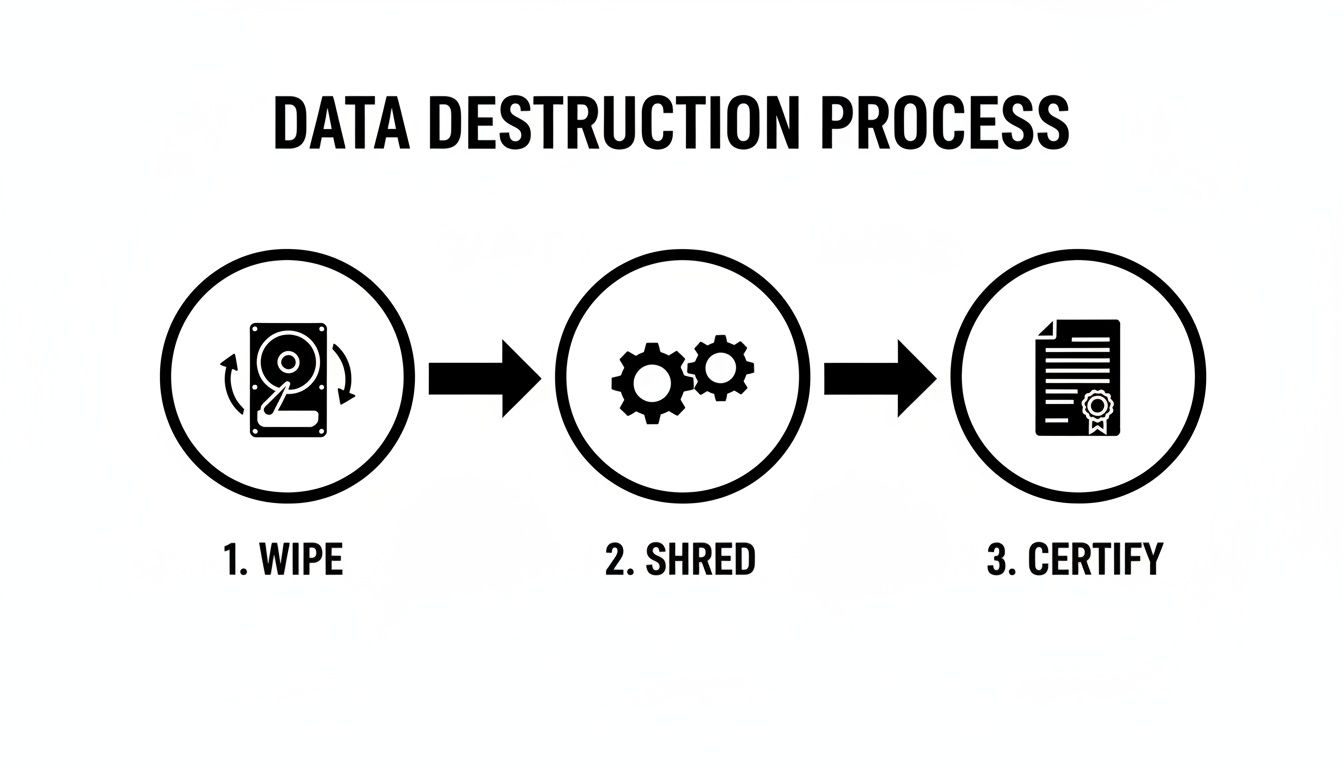
As the visual illustrates, the process is not complete until you have certified documentation.
Upon completion, your partner must provide official documentation, including a Certificate of Recycling and a Certificate of Data Destruction. These documents are your proof of compliance, closing the loop on your ITAD process and protecting your business from future liability.
When it comes to electronics recycling in Colorado, meeting current regulations is not enough. The waste management landscape is constantly evolving, and forward-thinking businesses are already preparing for future requirements. A proactive disposal strategy is not just about today's compliance—it's about building long-term operational resilience.
One of the most significant shifts gaining momentum nationwide is Extended Producer Responsibility (EPR). These laws re-assign the financial and logistical burden of recycling from municipalities and consumers back to the manufacturers who designed and sold the products.
The Rise of Extended Producer Responsibility
The principle is simple: when a company is responsible for a product's end-of-life, it has a powerful incentive to design products that are more durable, easier to repair, and simpler to recycle. Colorado is already moving in this direction, signaling a major shift in how all types of waste, including electronics, will be managed.
Recent data shows Colorado's statewide waste diversion rate is a sluggish 15.7%. Despite the 2013 electronics landfill ban, recycling programs have struggled without dedicated funding.
However, change is on the horizon. A new EPR law for packaging is set to take effect by 2026, and experts believe it will be a catalyst for the state's overall recycling infrastructure. You can get a comprehensive view of Colorado's evolving recycling landscape and future initiatives in this detailed overview.
Understanding these legislative trends allows your organization to move from a reactive compliance posture to a proactive, strategic one. Preparing for future regulations now helps avoid last-minute disruption and aligns your business with long-term sustainability goals.
Of course, ongoing compliance also means managing the hazardous materials present in many electronics. A crucial part of this is mastering Safety Data Sheet compliance, as this knowledge is fundamental for handling regulated components safely and legally.
By partnering with an ITAD provider that monitors both state and national trends, you can effectively future-proof your operations. This foresight not only insulates you from regulatory surprises but also solidifies your reputation as a corporation committed to environmental responsibility.
Choosing the Right ITAD Partner for Your Colorado Operations
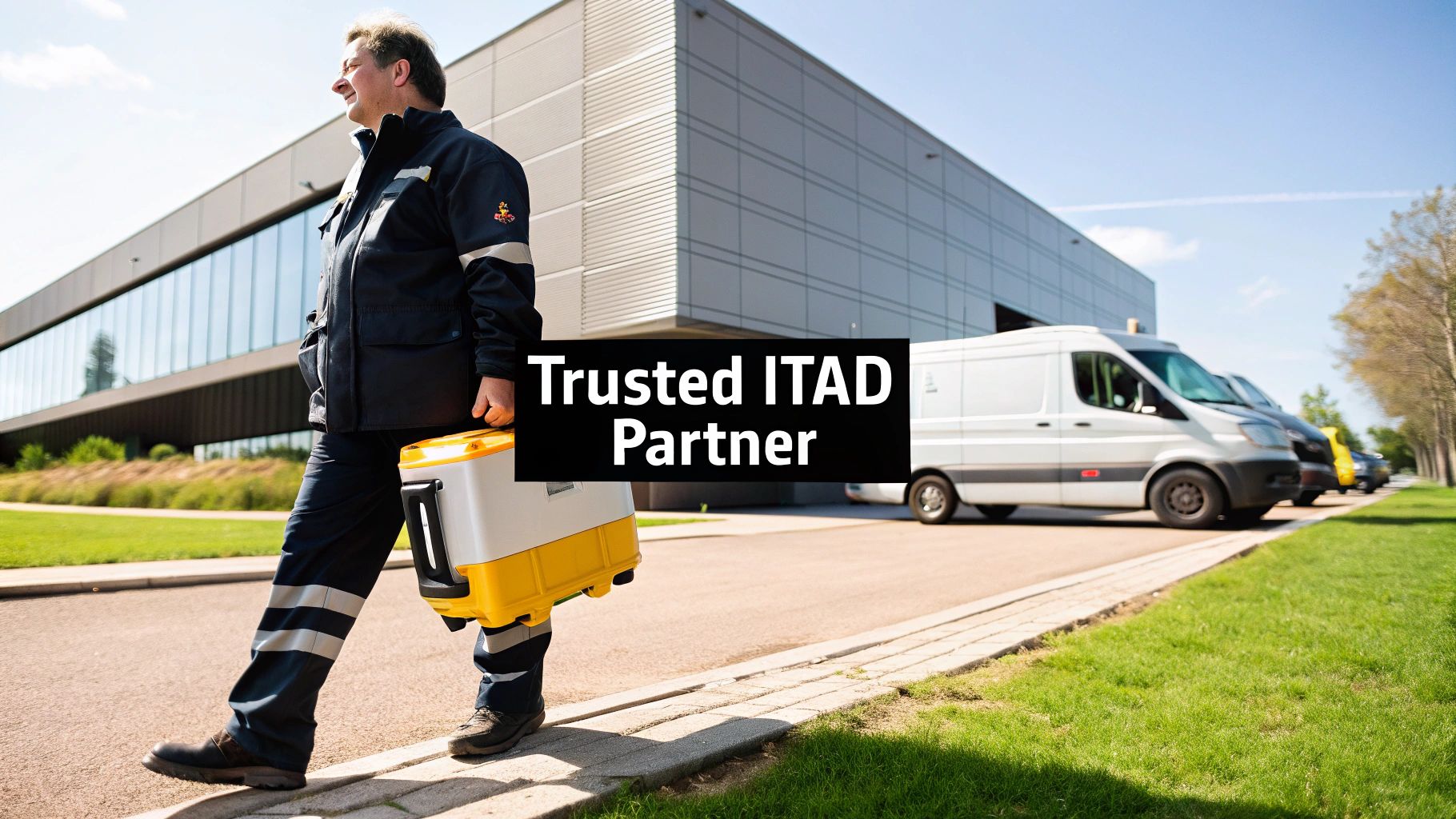
For any Colorado business, managing end-of-life IT equipment is more than a disposal task. Selecting an IT Asset Disposition (ITAD) provider is a strategic decision, particularly for companies with a multi-state footprint. Engaging a national partner eliminates geographical complexities and delivers expert service directly to your facilities, whether in Denver, Boulder, or a branch across the country.
A national scope streamlines logistics and operations significantly. The alternative—managing multiple local vendors—creates administrative burdens, inconsistent standards, and increased compliance risks.
The Power of a Single, Unified Partner
A national ITAD provider like Beyond Surplus eliminates this complexity. We serve as your single point of contact for all IT asset needs, ensuring the same high standards for data destruction, environmental processing, and documentation are applied uniformly across all your facilities.
This unified approach delivers significant advantages for your Colorado operations:
- Consistent Service Standards: Every project, from a full data center decommissioning to a routine office equipment refresh, follows the same secure and documented protocol.
- Comprehensive Liability Coverage: Our certifications and insurance protect your entire organization, providing consistent and reliable risk management across all locations.
- Maximized Asset Value: Access to a broad, national resale market increases the potential for value recovery from retired but functional IT assets.
Partnering with a national provider ensures that best-in-class, secure service is available wherever your business operates. It simplifies compliance and enhances operational efficiency by standardizing a critical business function.
Nationwide Reach with Local Expertise
Whether you need to dispose of specialized medical equipment, securely destroy proprietary products, or manage a complete data center decommissioning, a national partner brings extensive experience. We understand the specific nuances of Colorado electronics recycling regulations while providing the capabilities of a nationwide network. It is a solution that is both locally compliant and nationally scalable.
Discover more about our comprehensive Colorado ITAD services and see how a single, trusted partner can simplify your entire asset management program. This approach ensures your business remains secure and compliant, no matter where your operations expand.
Your Business E-Waste Questions, Answered
When managing electronics recycling and IT asset disposition for your business in Colorado, several key questions often arise. Here are the practical, compliance-focused answers essential for your operations.
What Documentation Proves Our Company Is Compliant?
The two most critical documents are the Certificate of Recycling and the Certificate of Data Destruction. These are your official, legally-binding records of proper disposal. The Certificate of Recycling formally transfers liability from your company to the recycler, confirming your equipment was managed according to all state and federal environmental laws. The Certificate of Data Destruction verifies that all data-bearing devices were sanitized or physically destroyed according to standards like NIST 800-88, serving as your primary defense against any inquiries regarding data privacy compliance.
Does The State Landfill Ban Apply Differently To Businesses?
While Colorado's e-waste landfill ban applies to all entities, the consequences and responsibilities for a business are far greater than for a household. The key differentiators are volume and risk. A typical corporate office refresh can involve hundreds of devices, each containing sensitive company and client data. For a business, non-compliance is not a minor infraction but a significant liability, creating risks of data breaches, substantial financial penalties, and severe damage to your brand's reputation.
How Does The IT Asset Value Recovery Process Work?
Value recovery, or IT asset remarketing, begins with a detailed assessment of your decommissioned equipment. Our technicians evaluate each item based on its functionality, cosmetic condition, and current fair market value. Assets with resale potential are securely sanitized of all data, refurbished, and then sold through established secondary market channels. Your business receives a share of the revenue generated from these sales, which can help offset recycling costs and provide a return on your original IT investment.
Can Specialized Assets Be Recycled?
Yes, specialized equipment such as medical devices, laboratory instruments, or proprietary industrial machinery can and must be recycled correctly. The key is partnering with a certified ITAD provider experienced in handling these non-standard assets. This type of equipment often requires specific disassembly procedures to manage proprietary technology or regulated materials safely. A qualified vendor will have the certifications and expertise to ensure these unique assets are processed securely, compliantly, and in an environmentally responsible manner.
For a partner that handles every aspect of commercial IT asset disposition with certified security and nationwide reach, contact Beyond Surplus. We provide comprehensive solutions to keep your Colorado business compliant and secure. Learn more about our nationwide ITAD services.